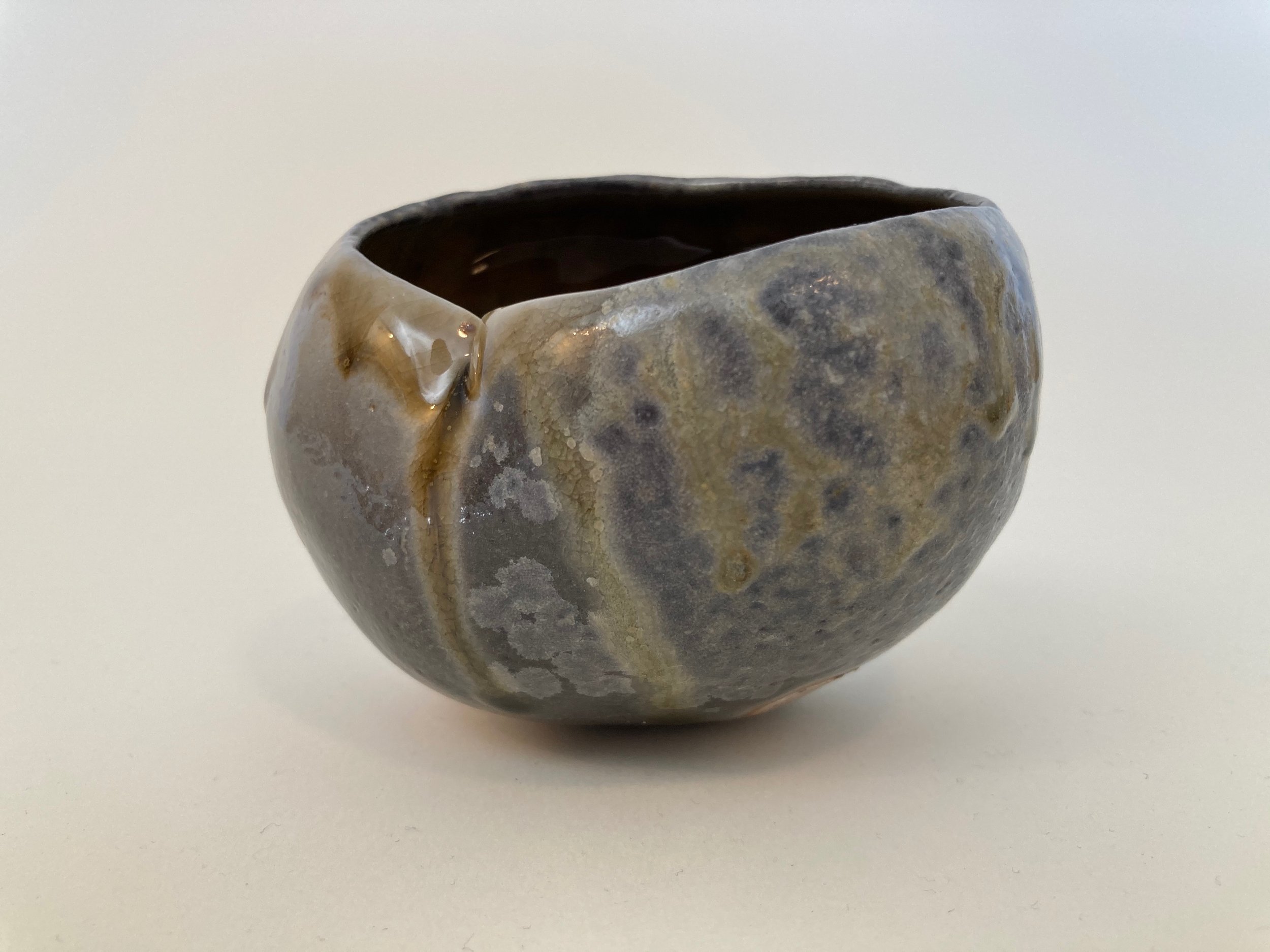
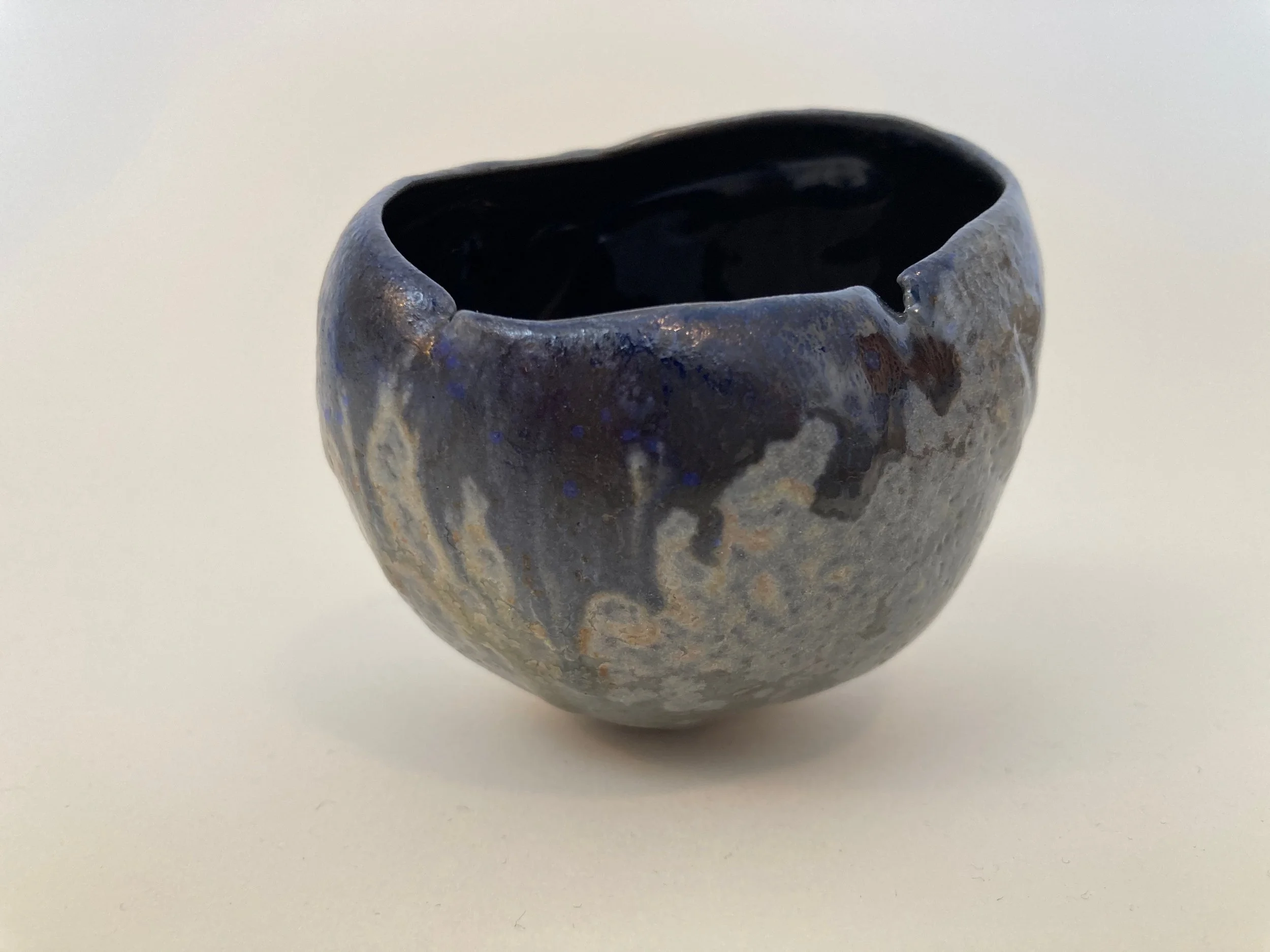
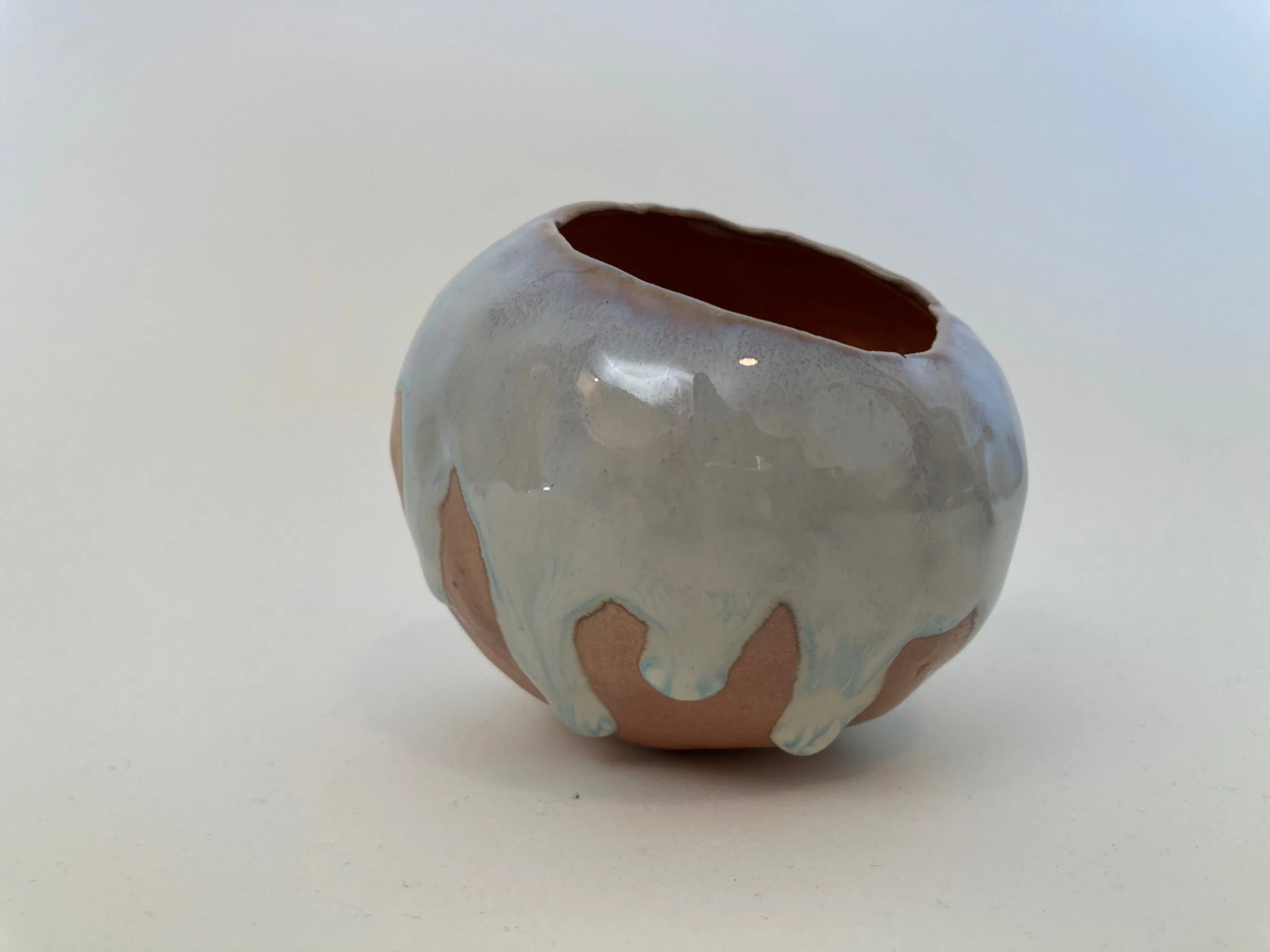
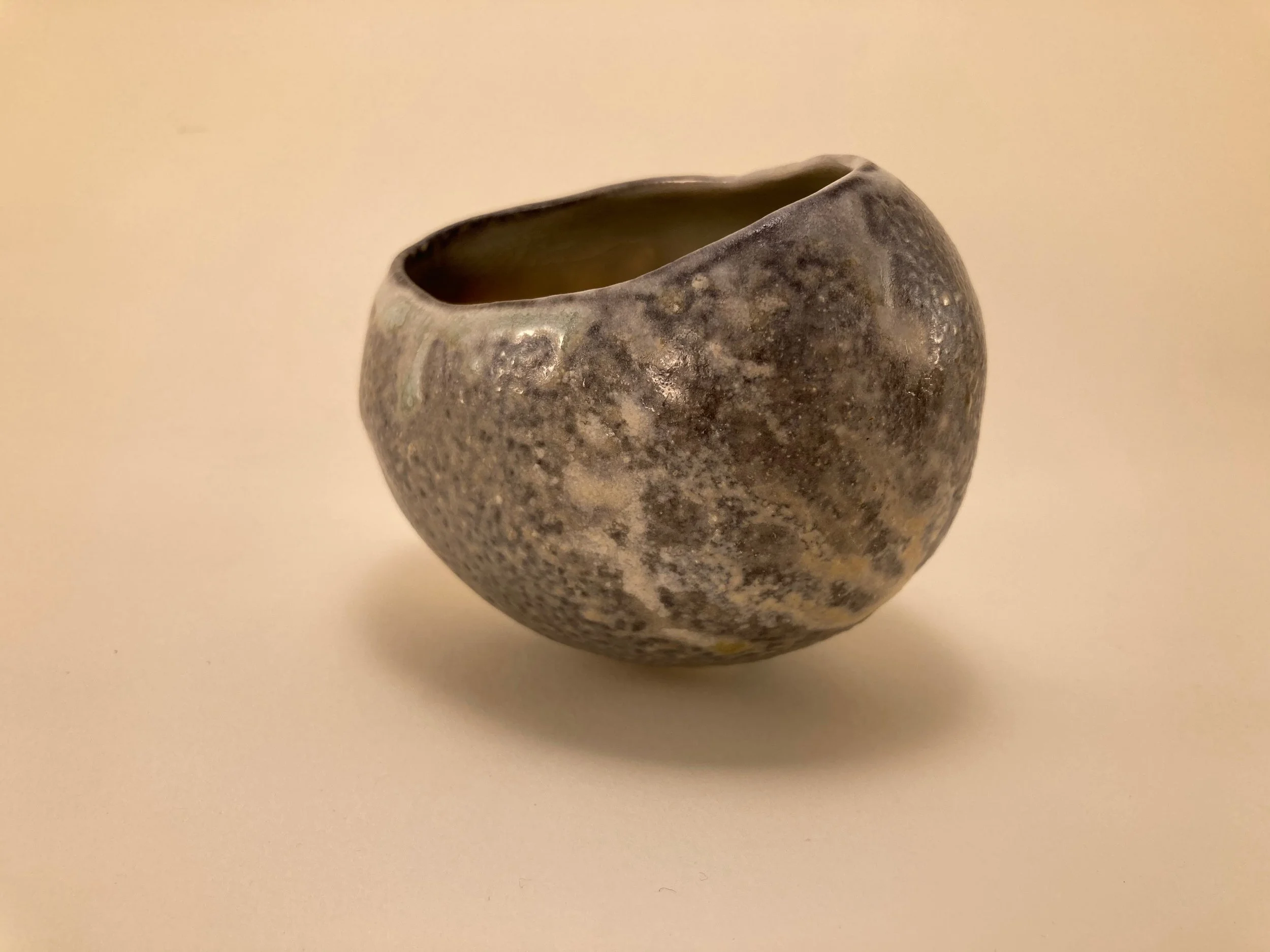
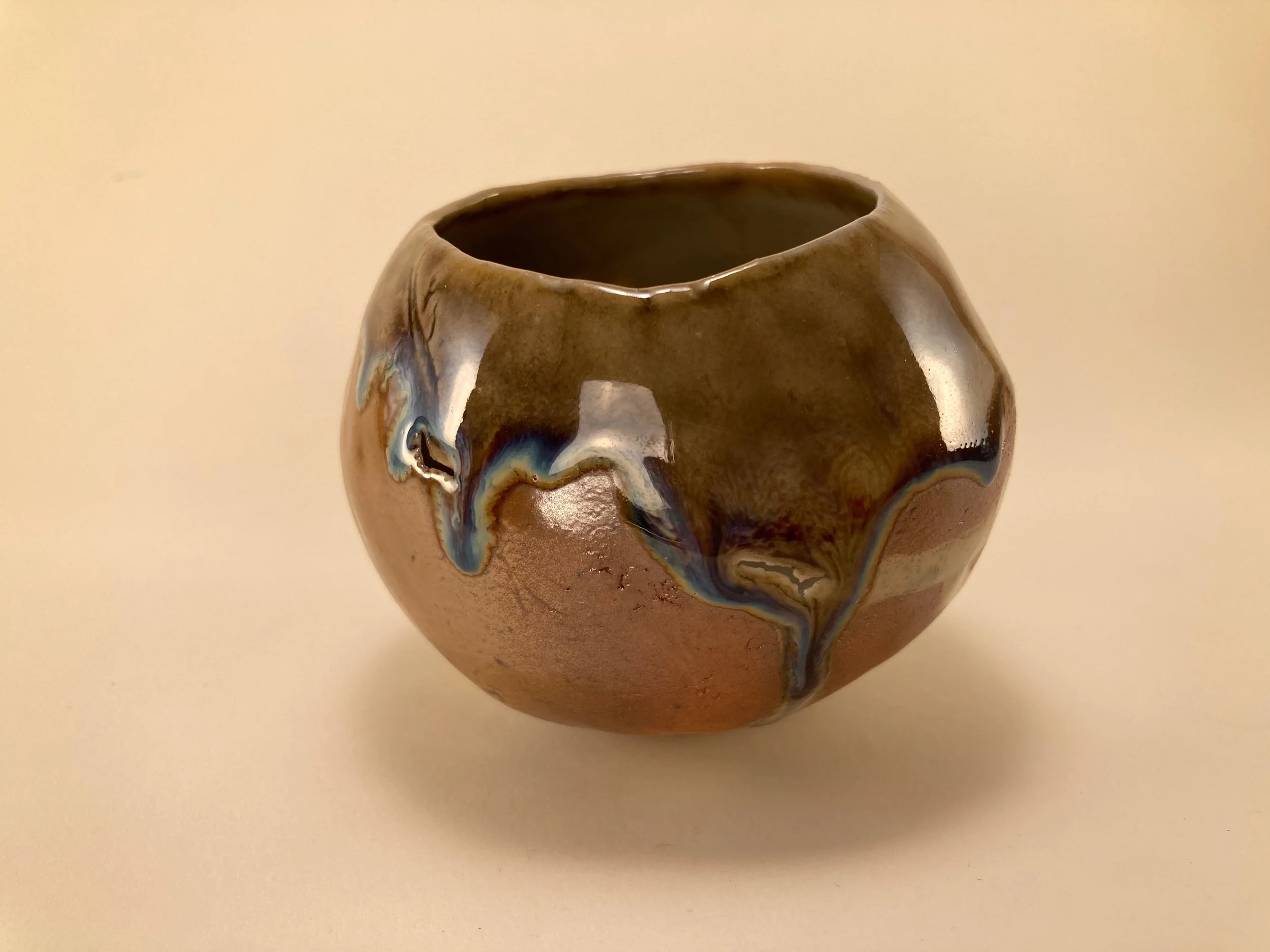
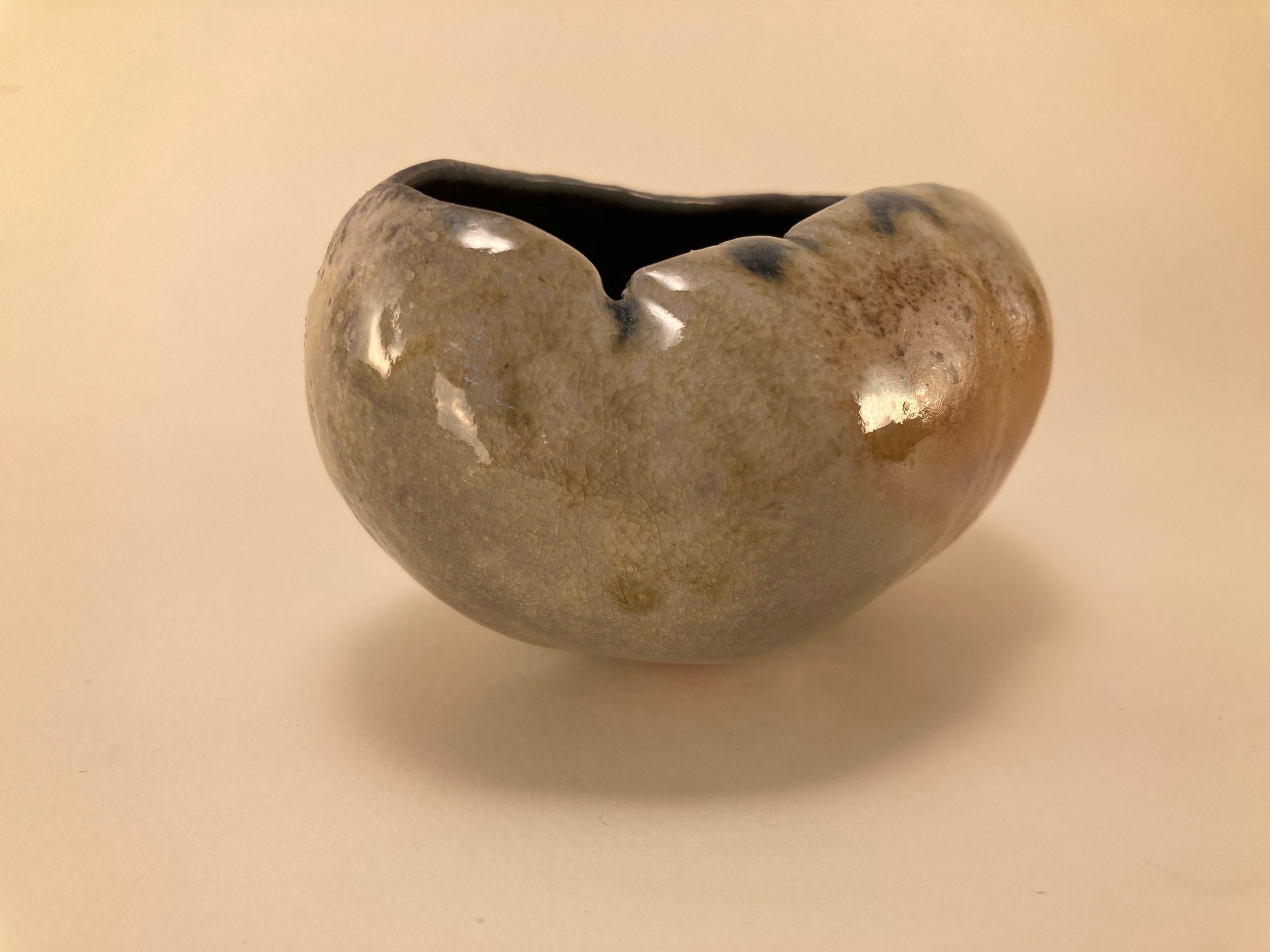
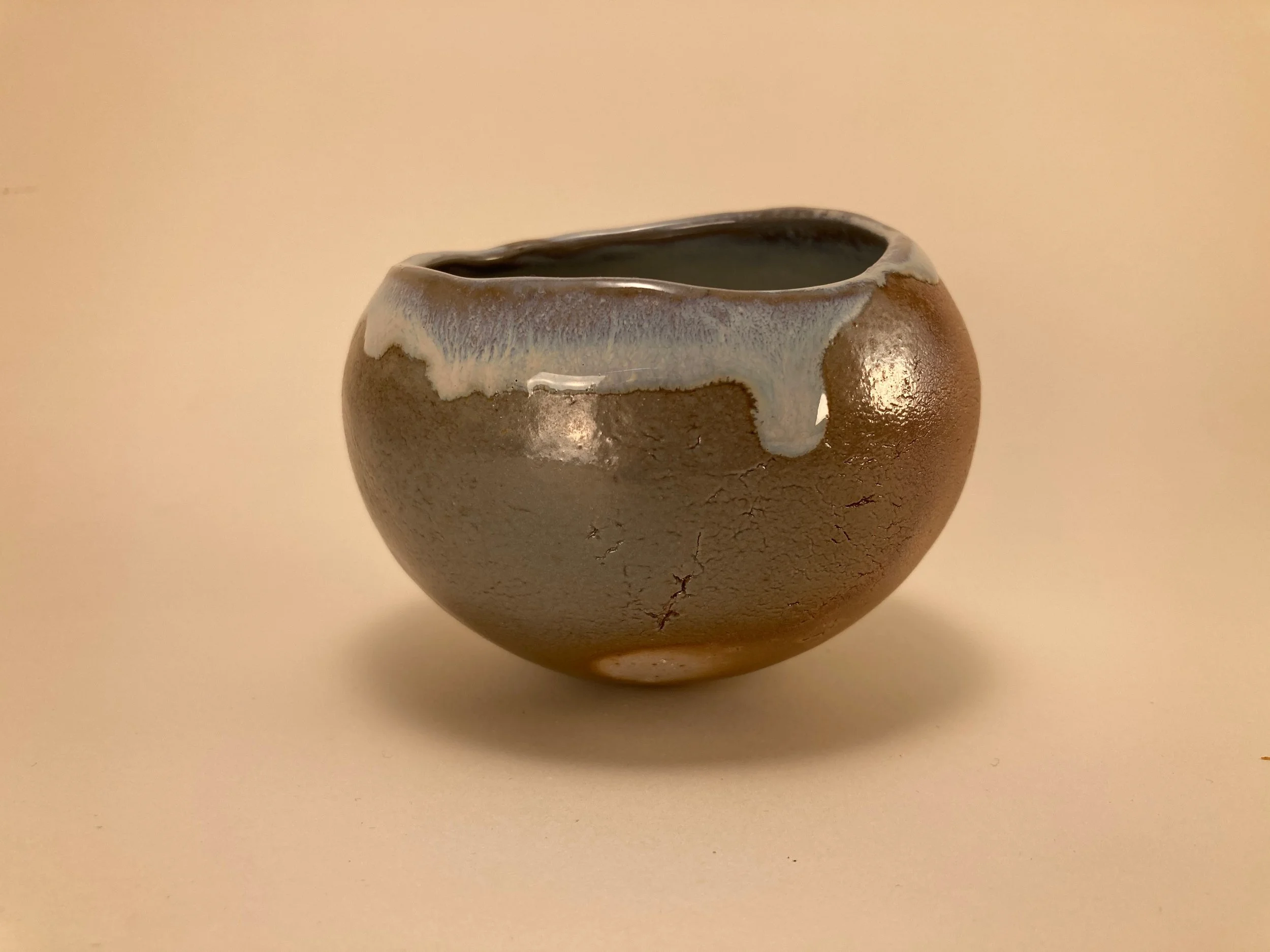
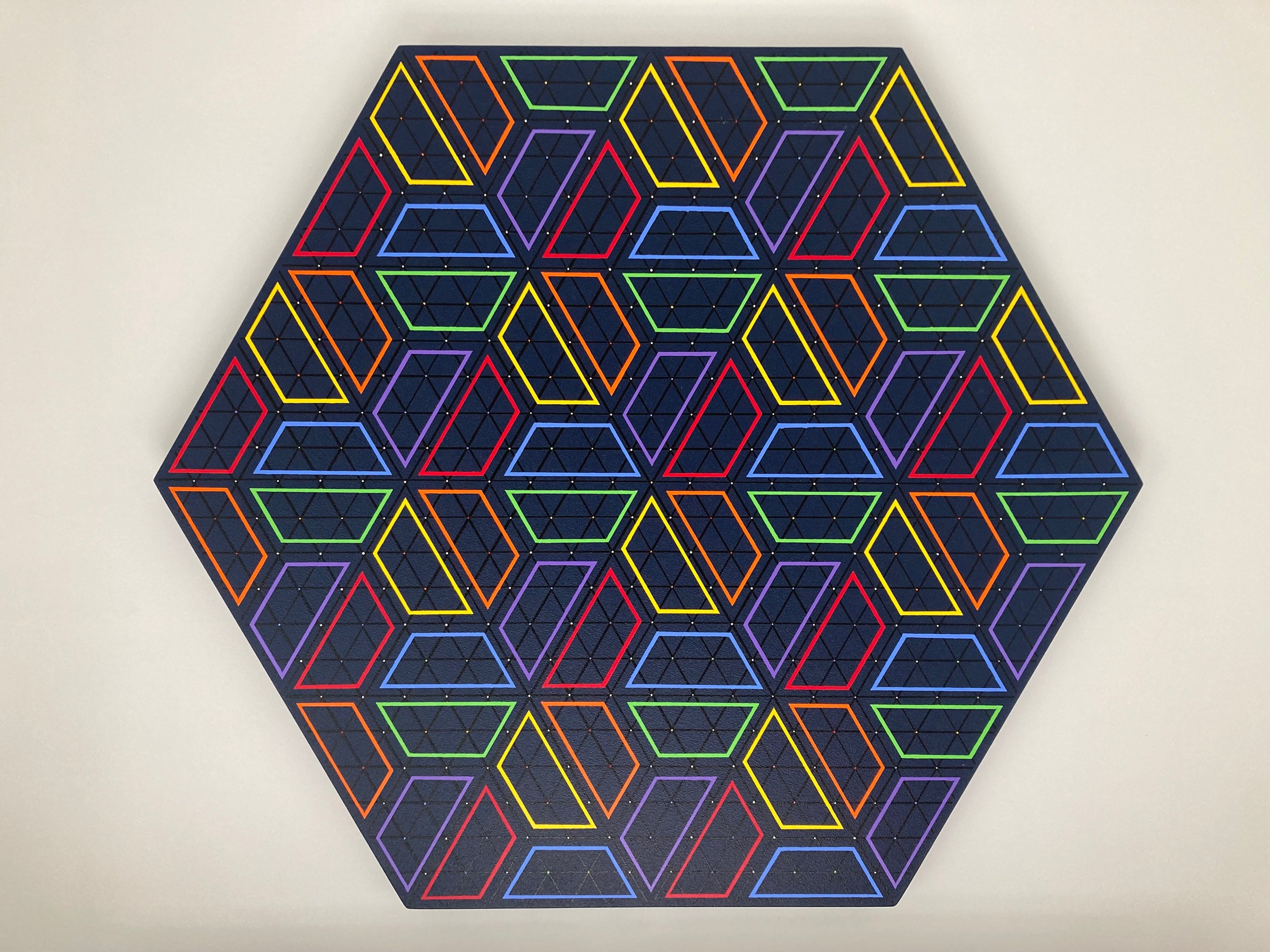
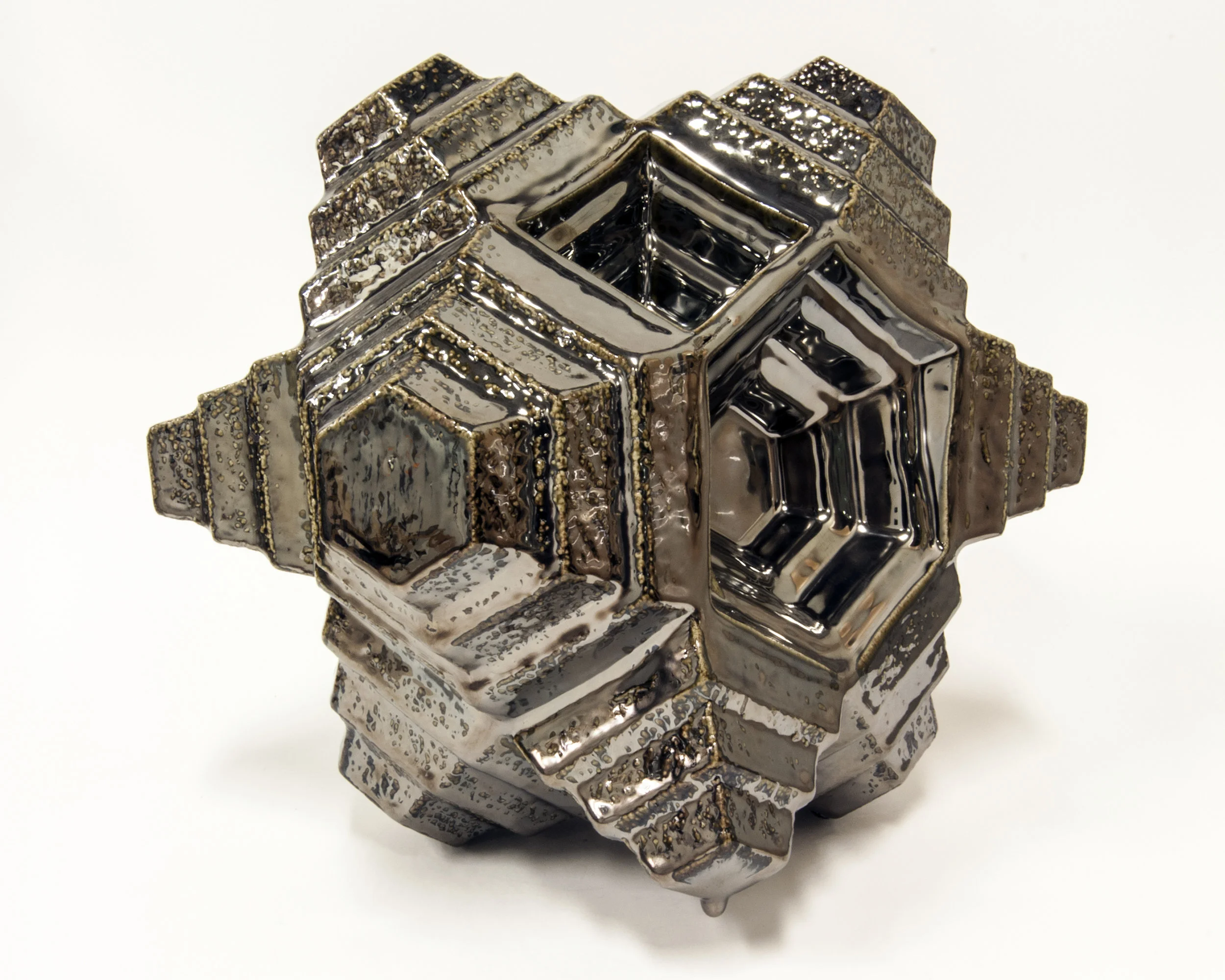
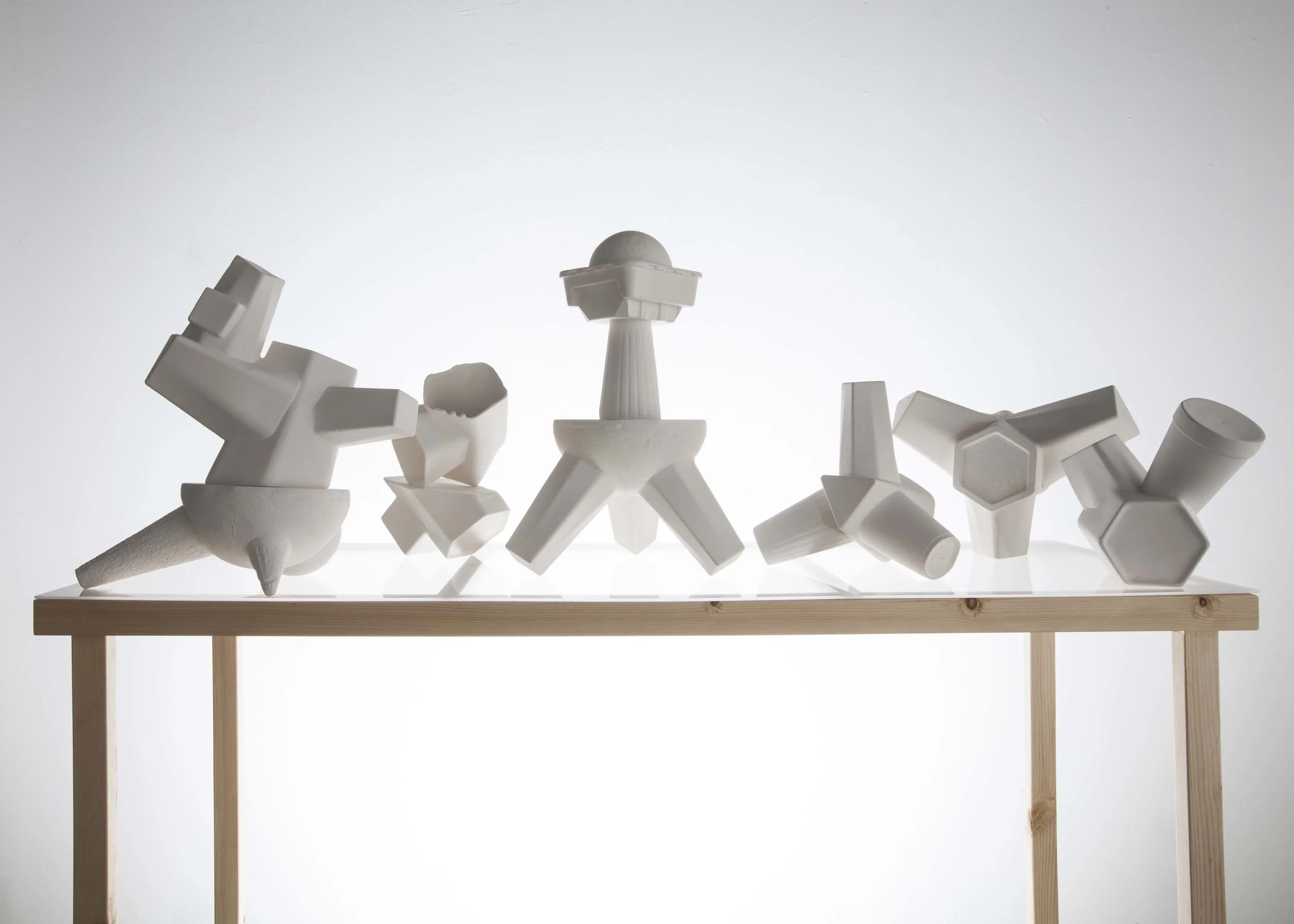
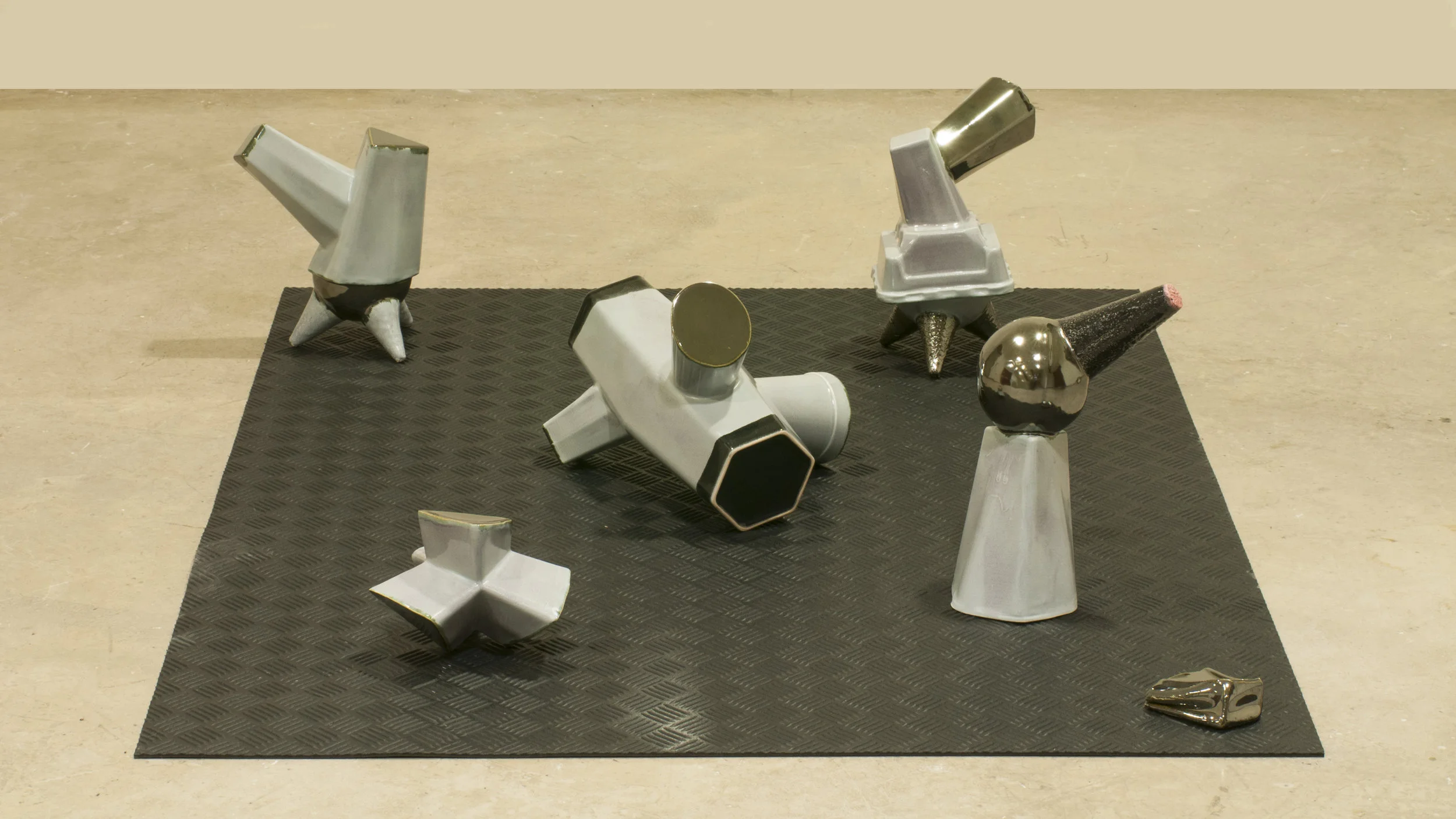
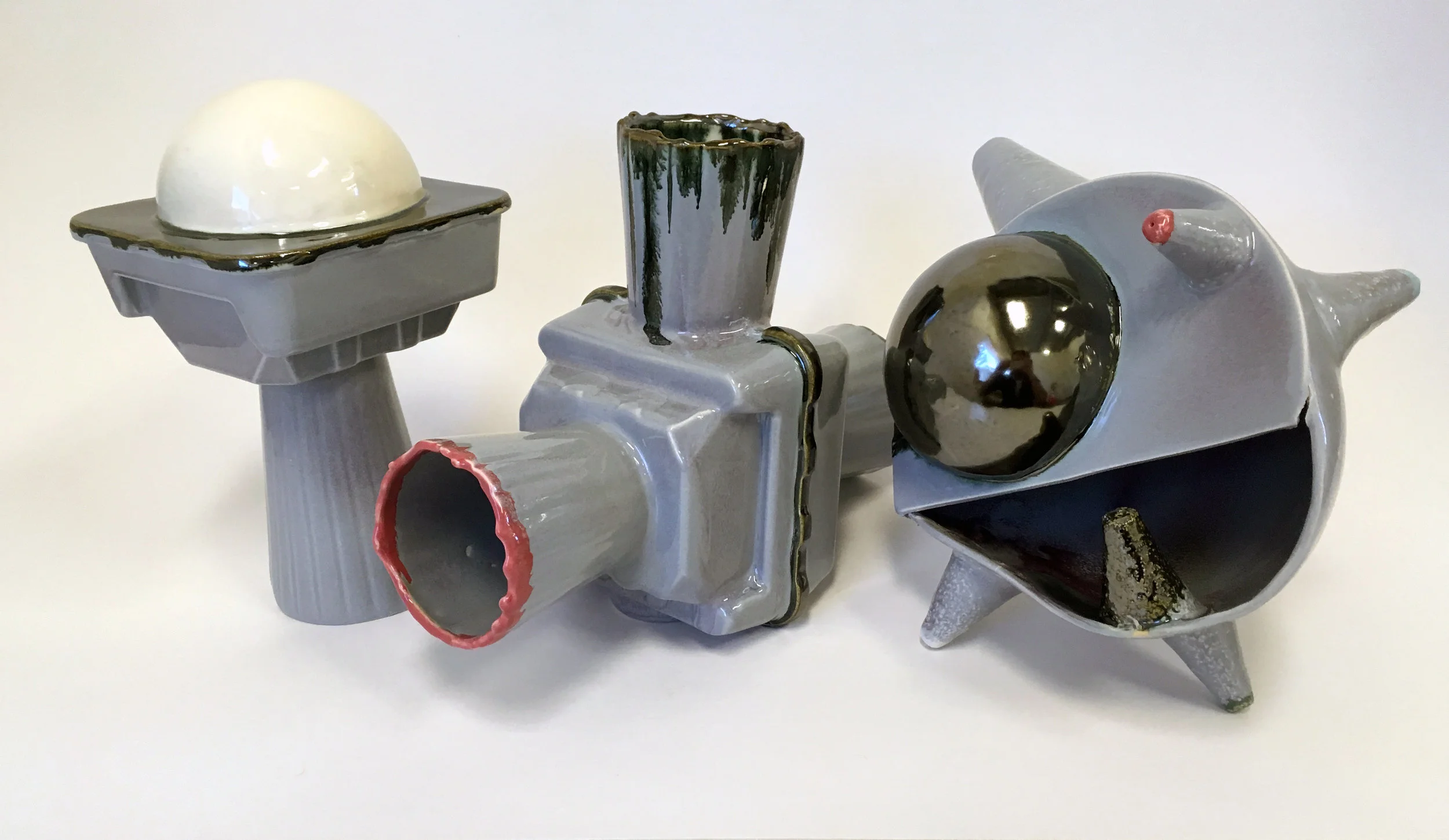
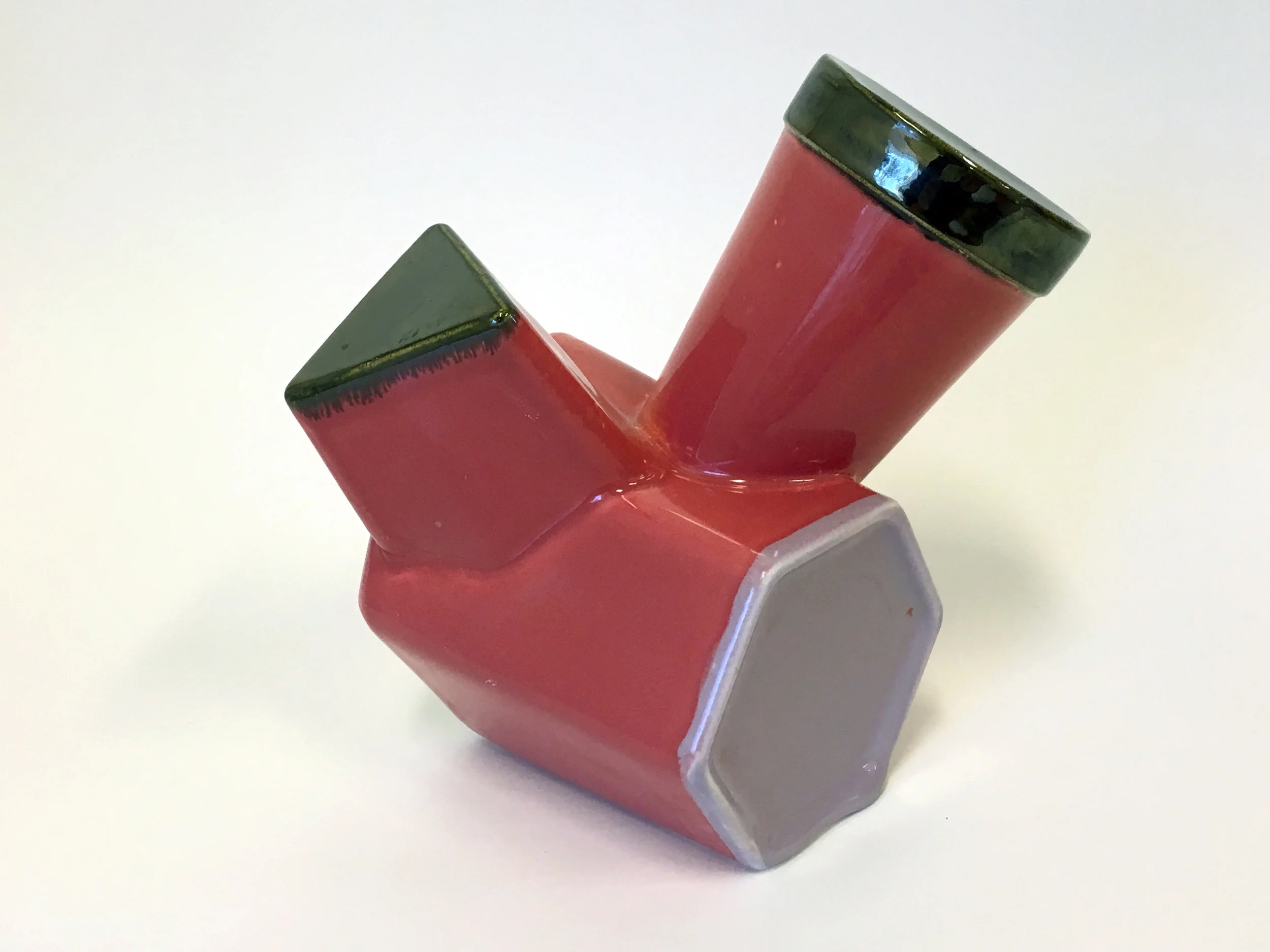
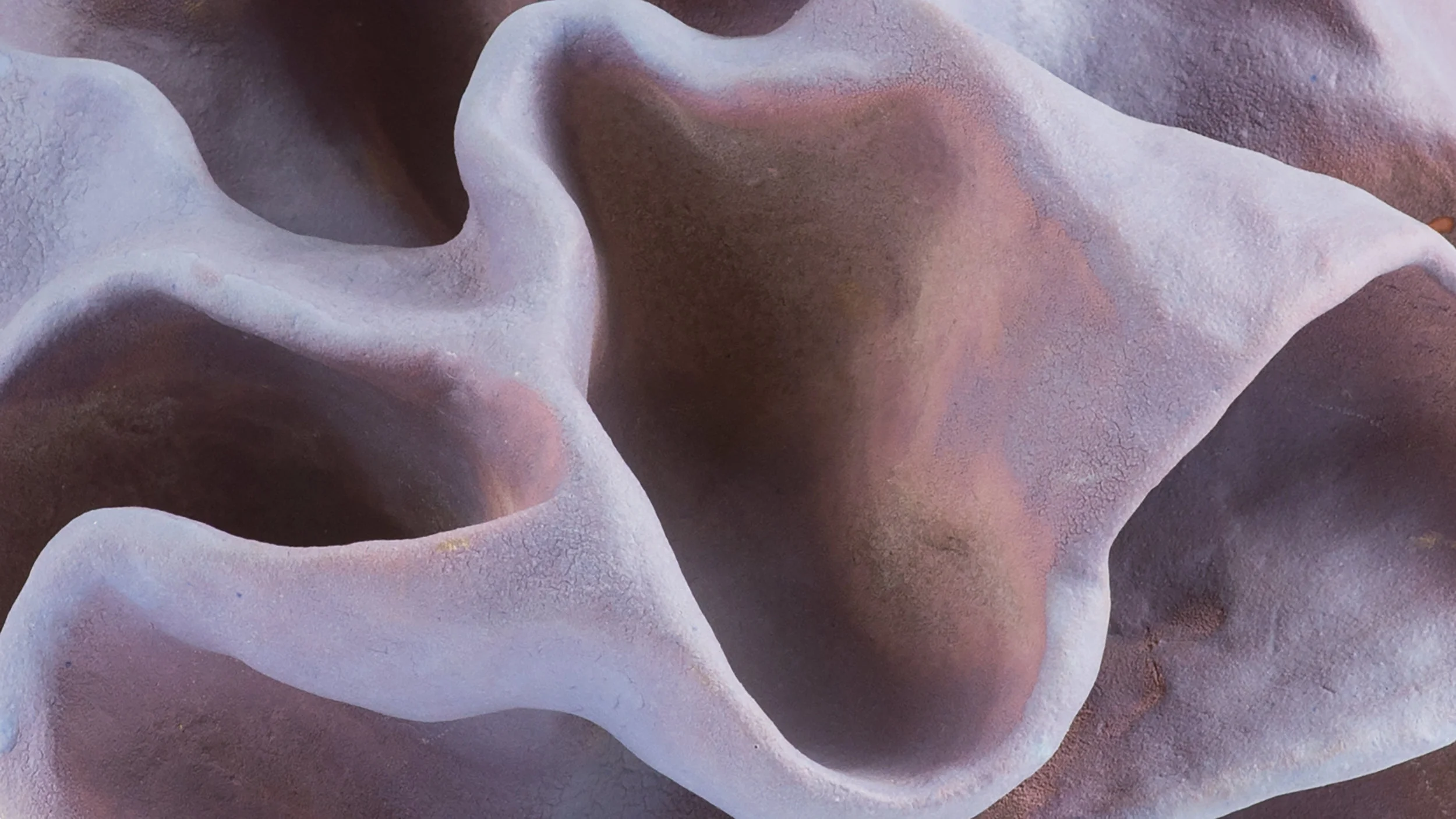
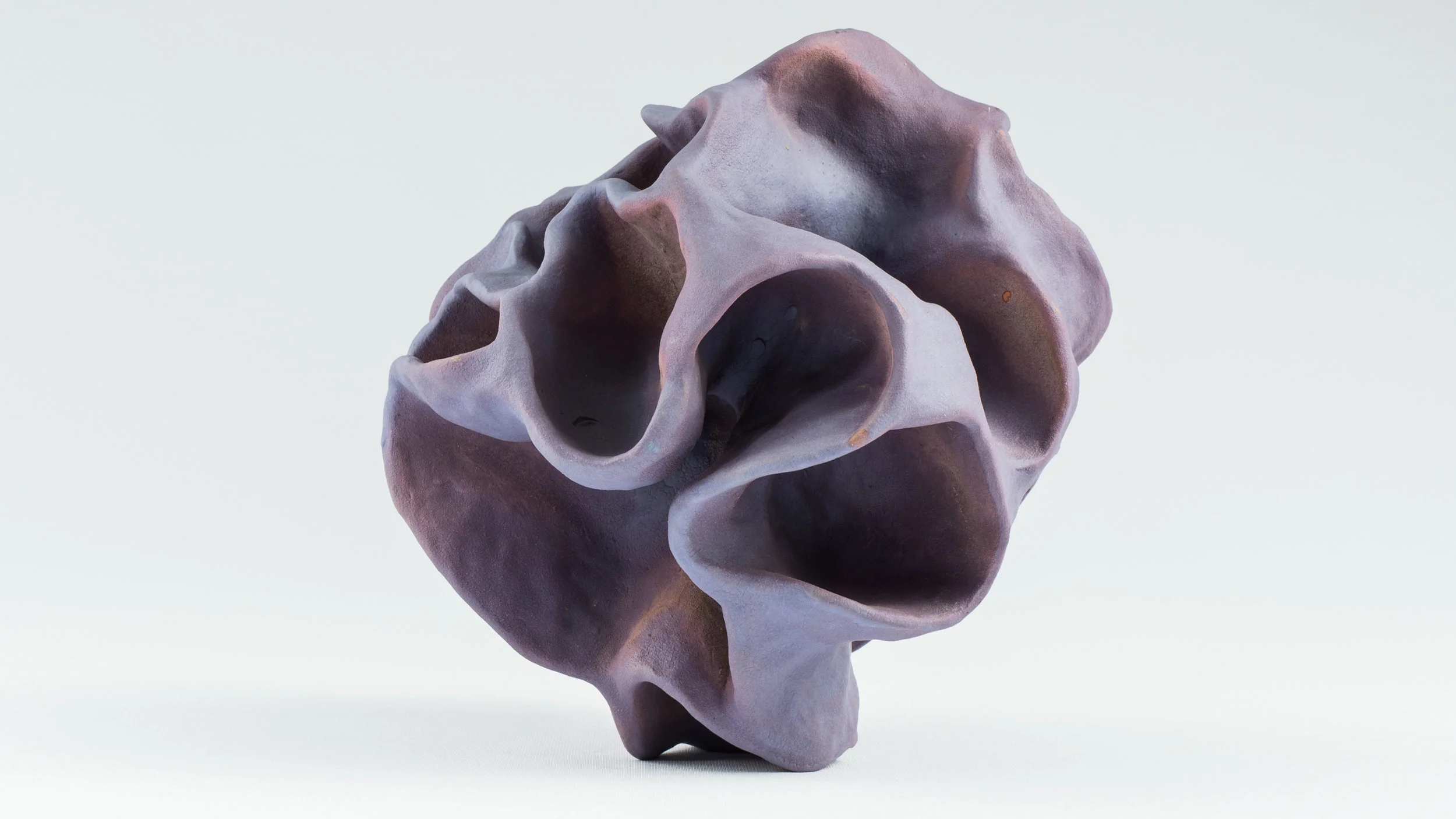
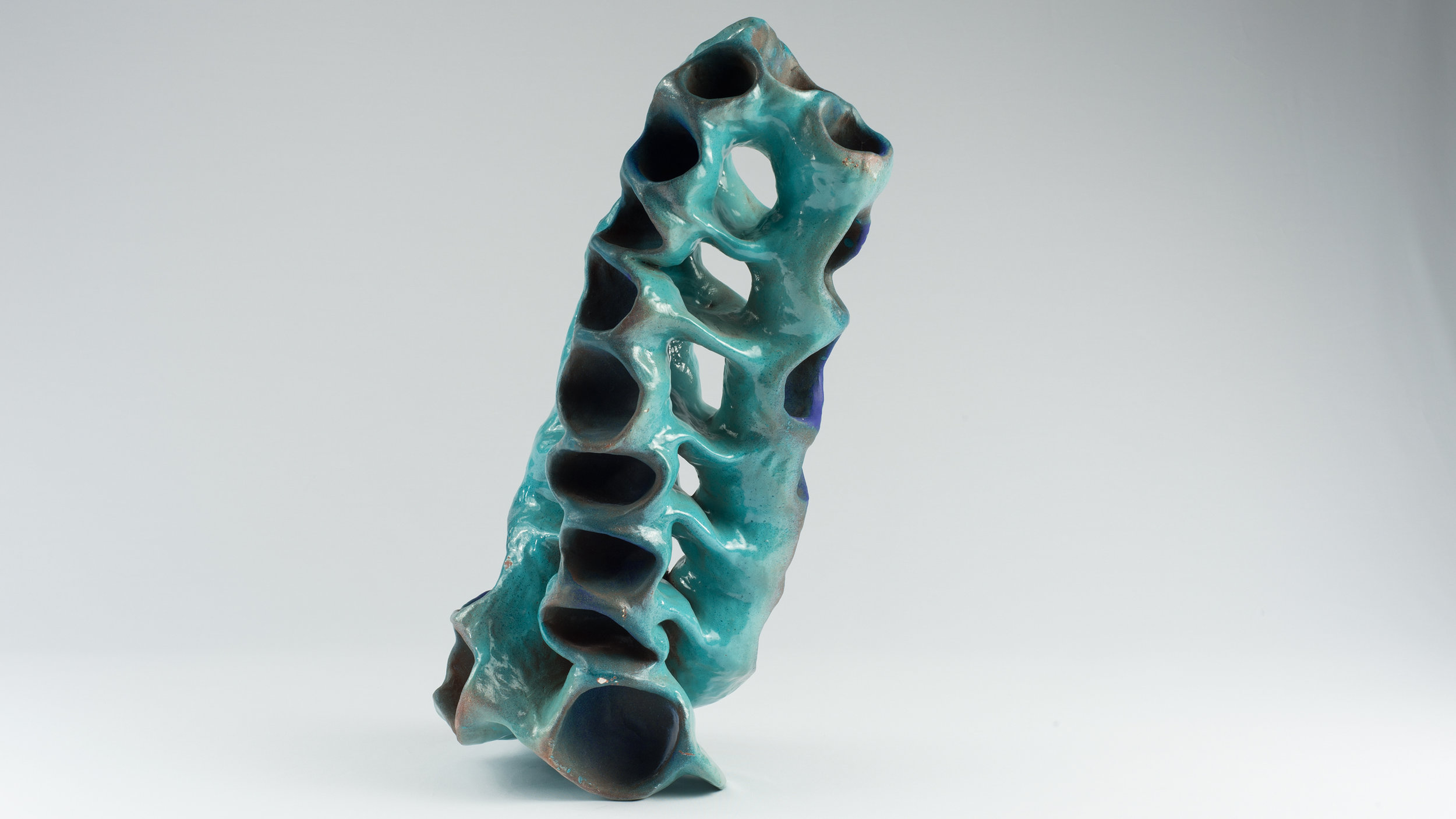
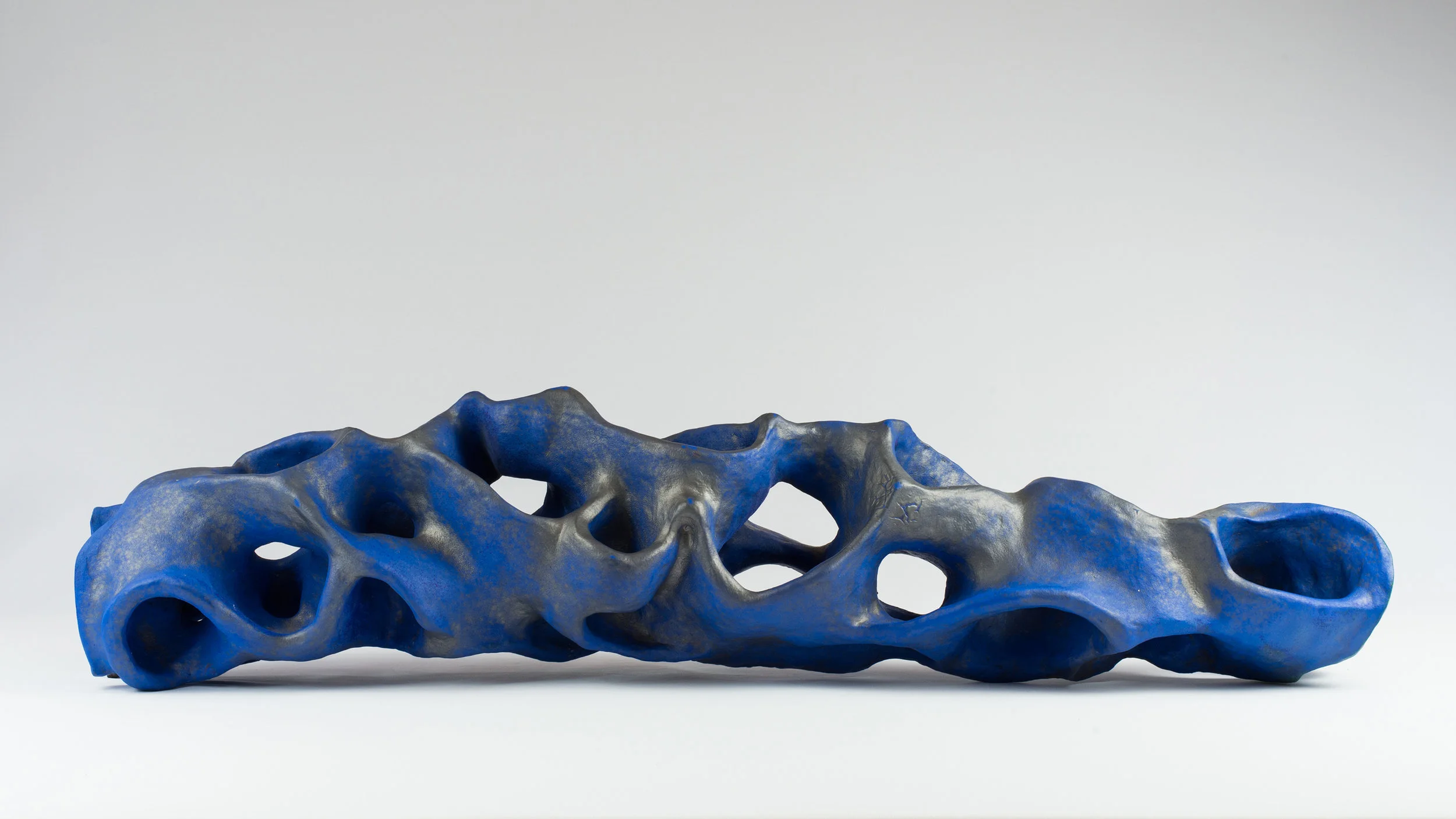
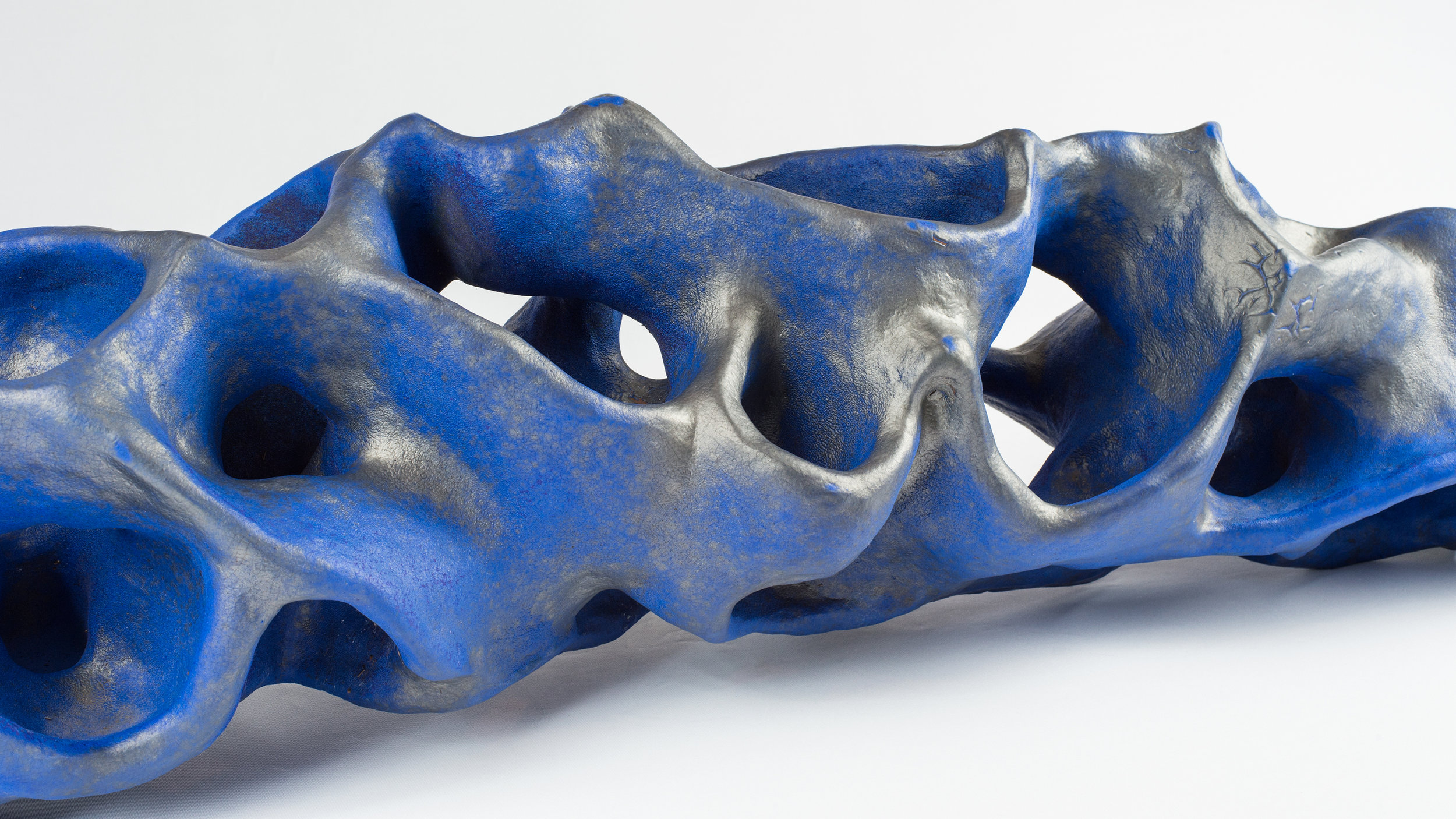
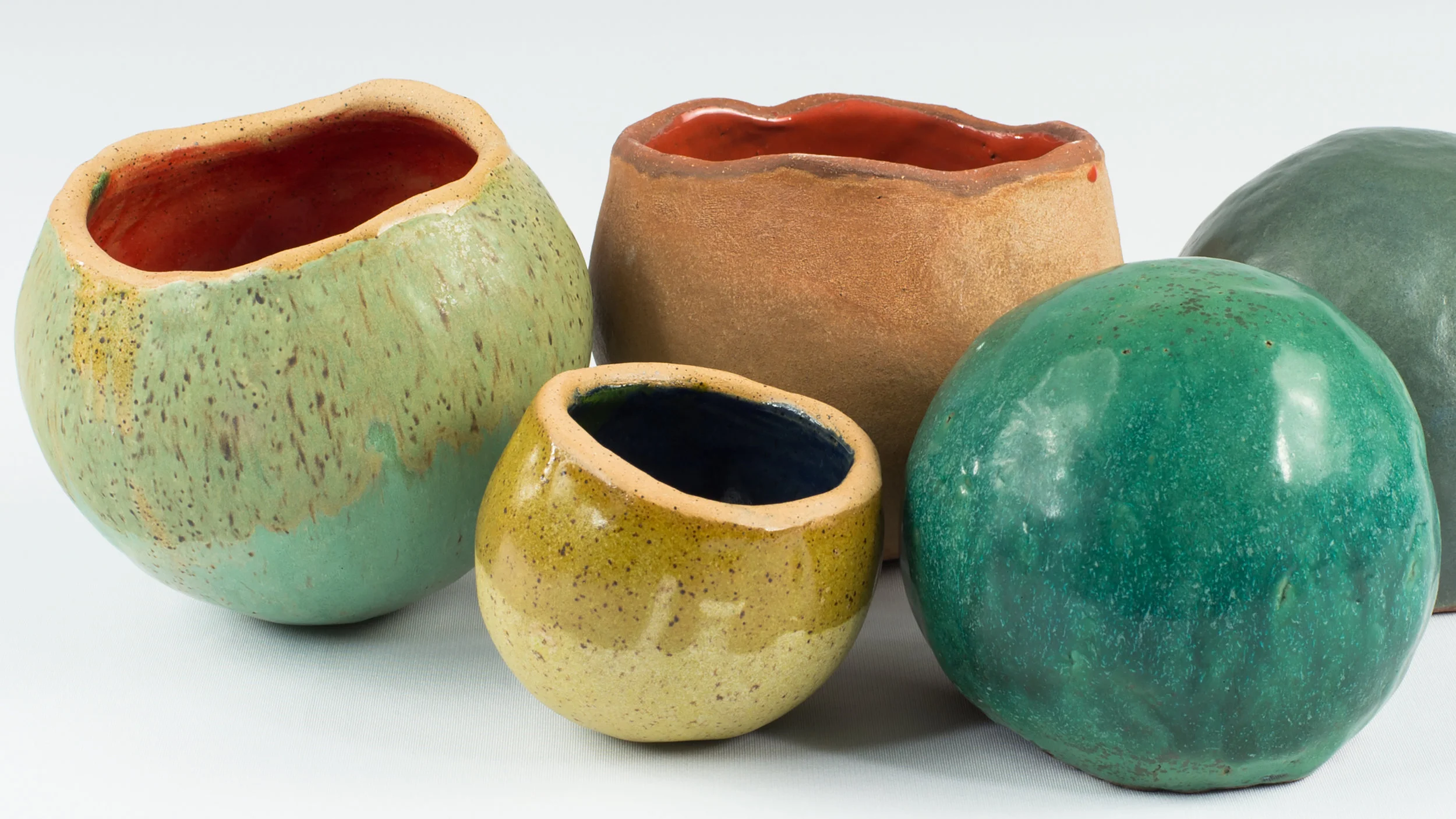
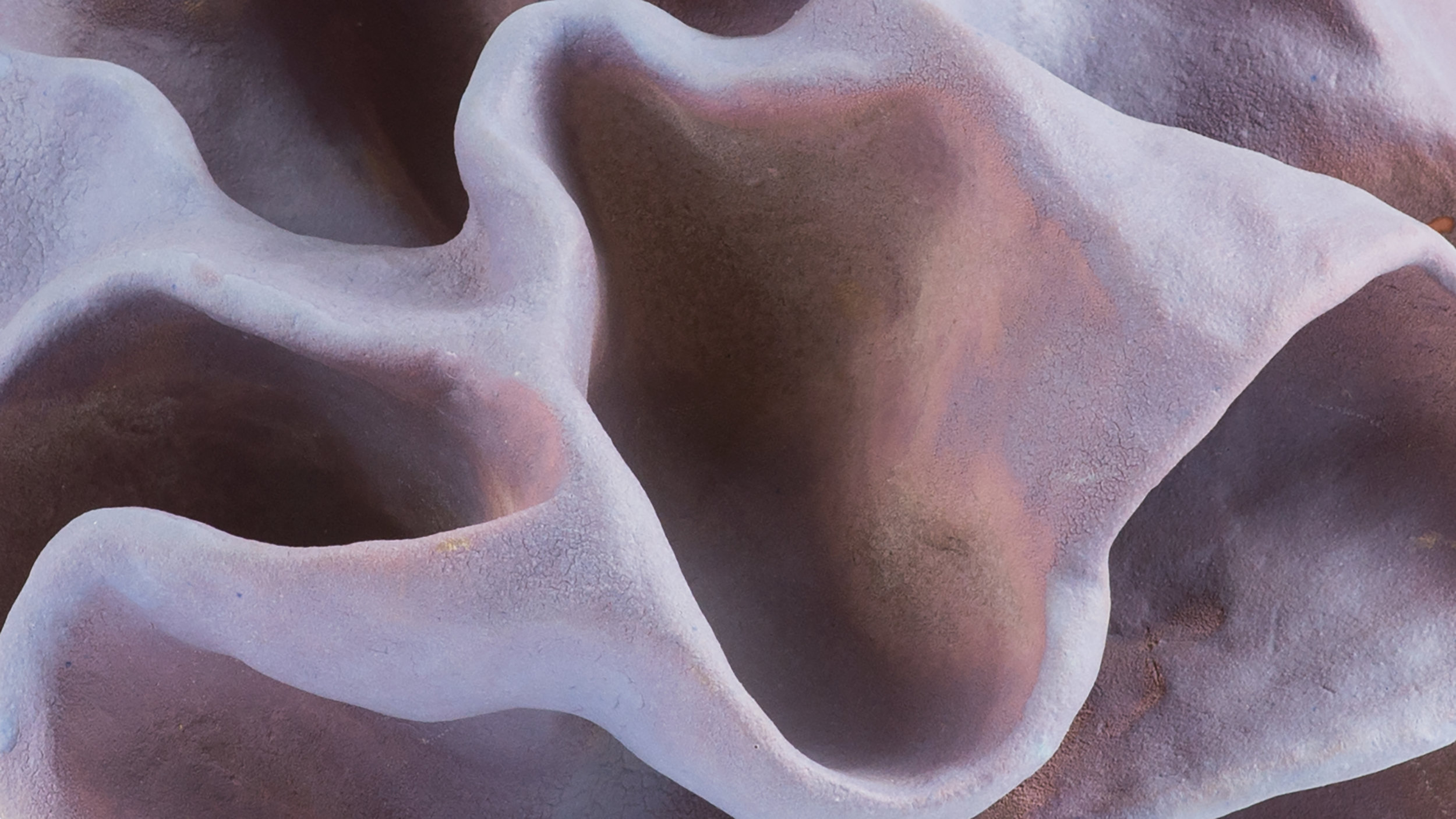
The Bath Pot series began after I broke my ankle skateboarding. I would make a pinch pot while I took a bath. This occupied my time while the humid environment extended the working life of the clay. These are an exercise in patience where I challenge myself to work on the pot for as long as I can. The results are some of the most delicate pots I’ve ever made. My goal is to get them in atmospheric firings in order to let the firing do the work of effecting the surface. Most of this series has been wood fired at College for Creative Studies.
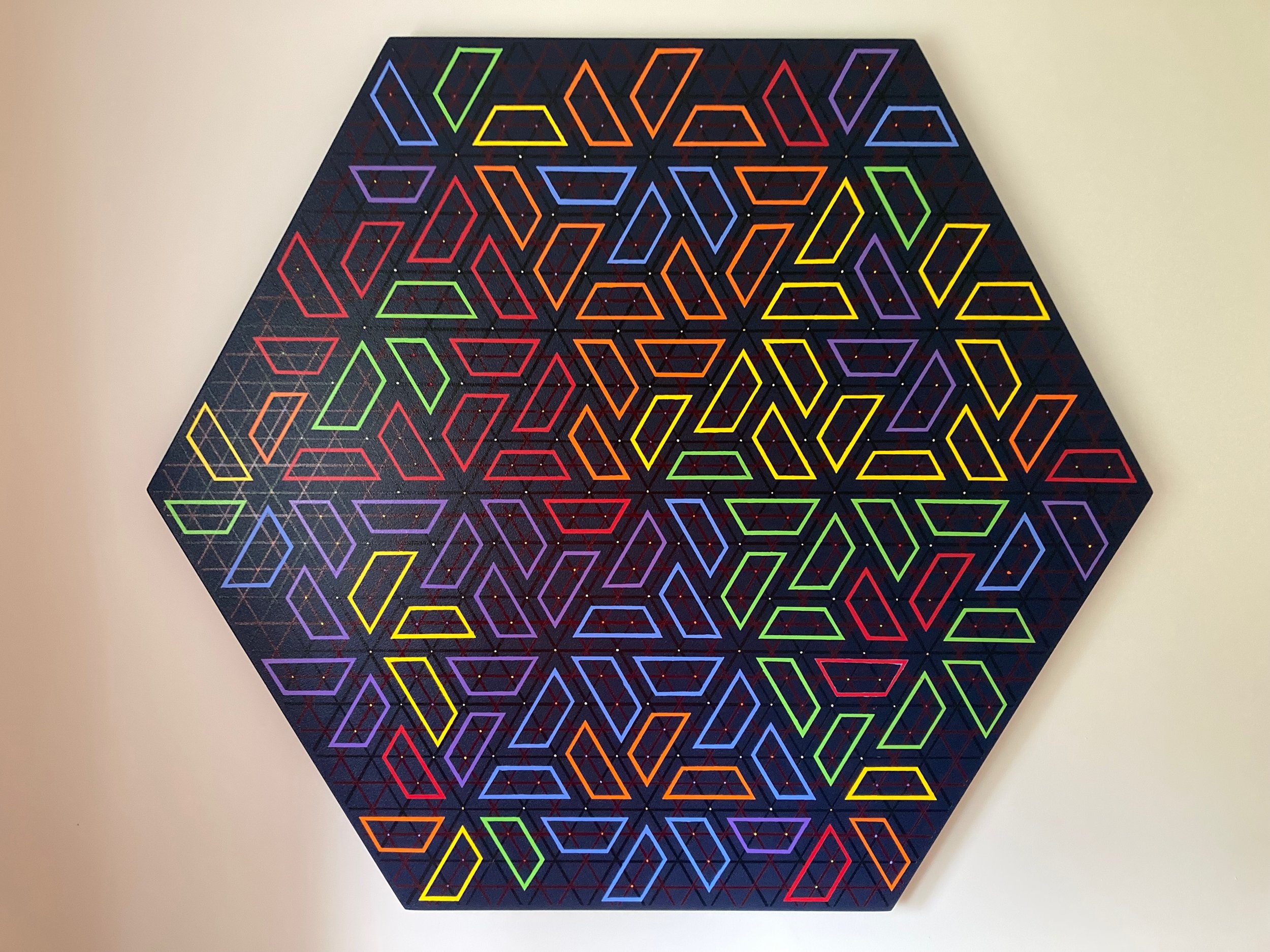
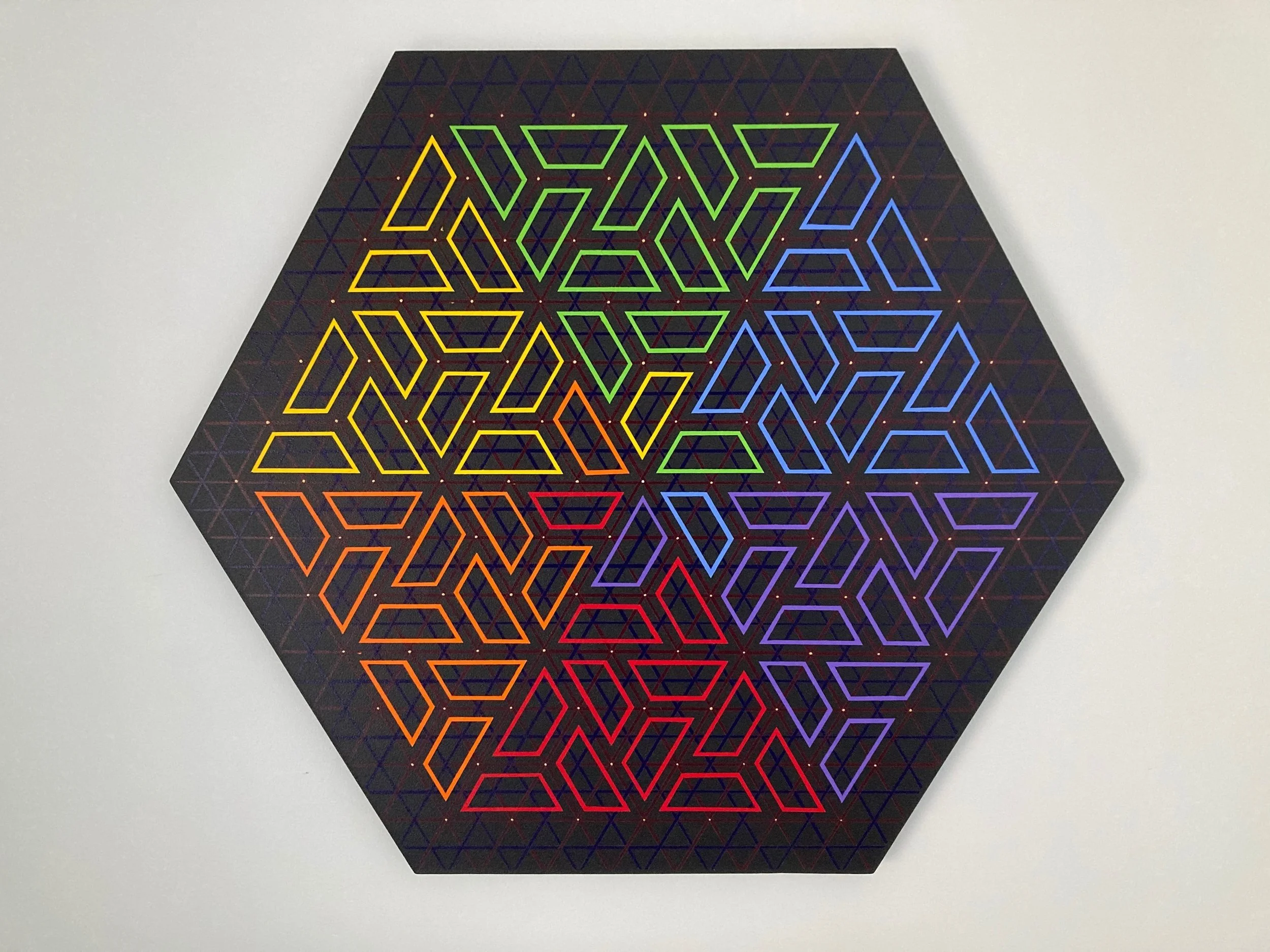
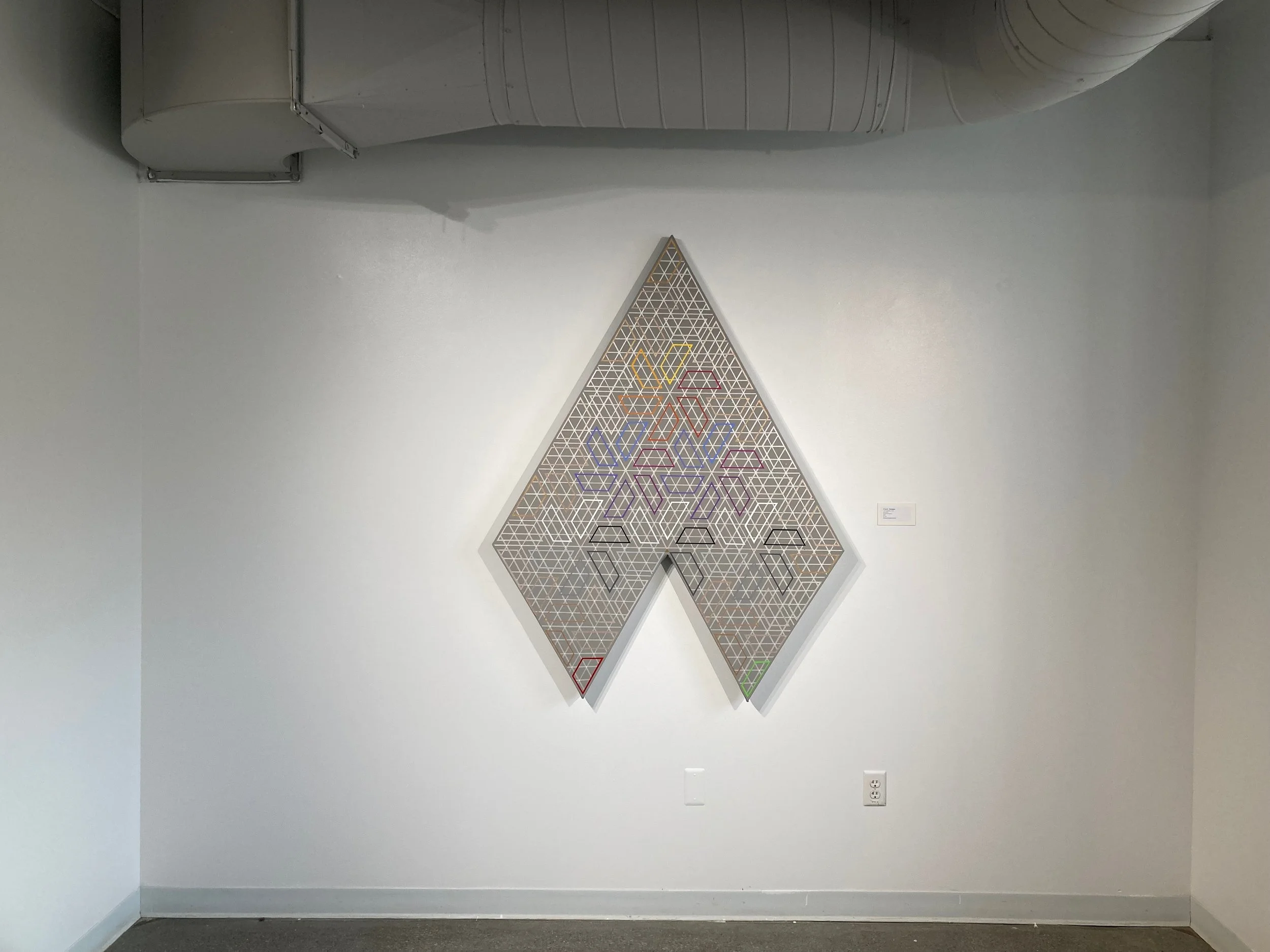
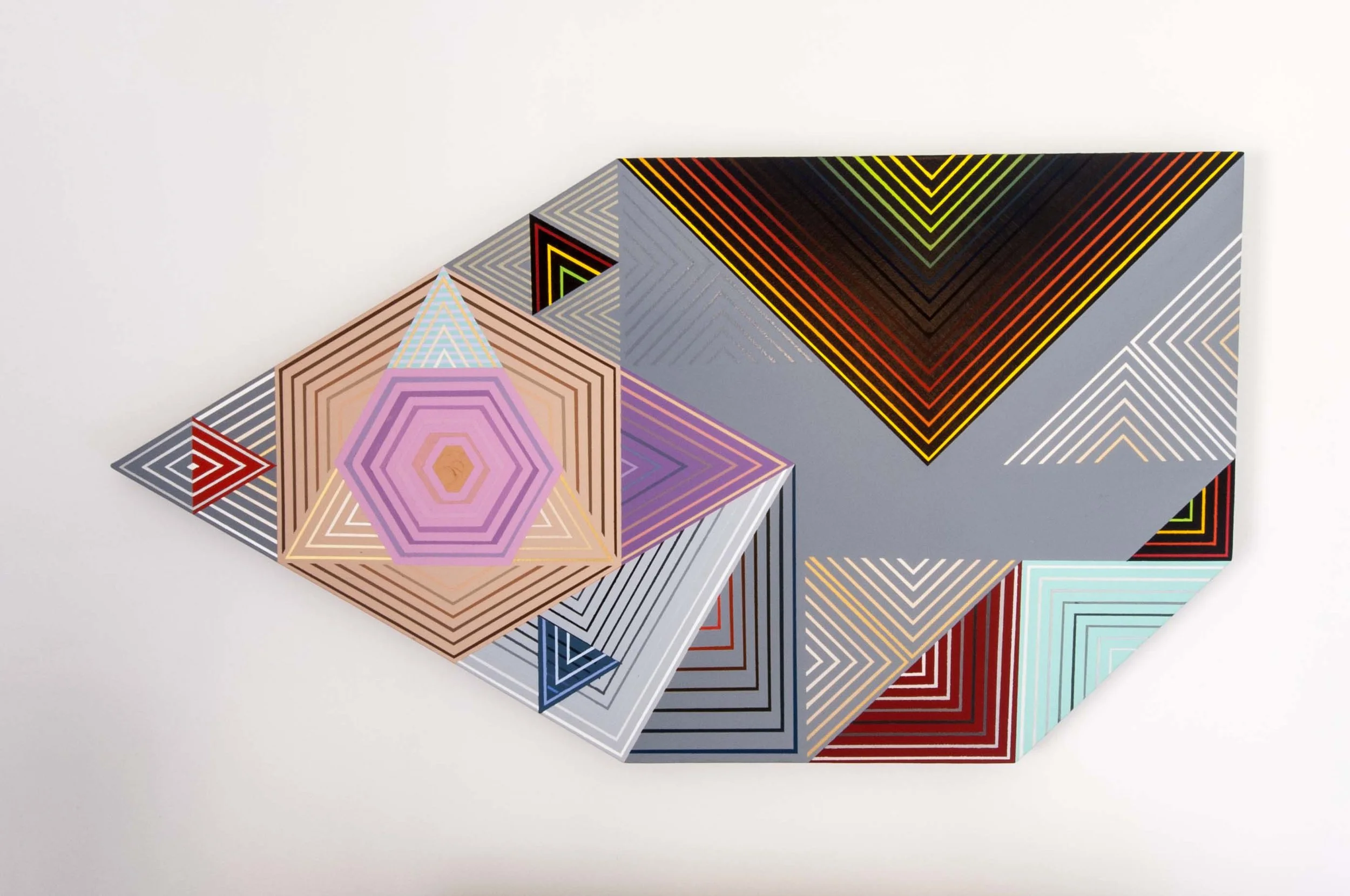
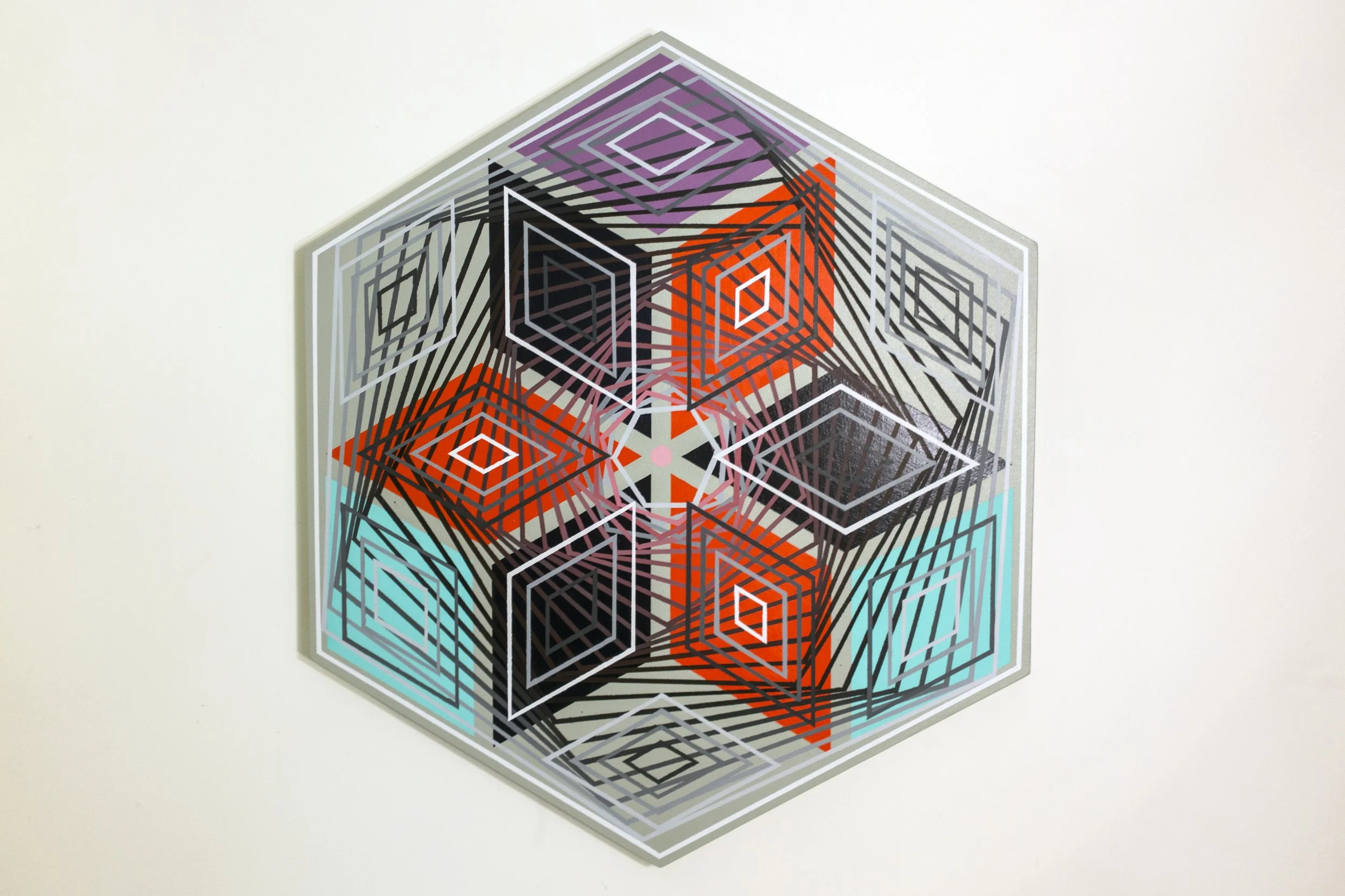
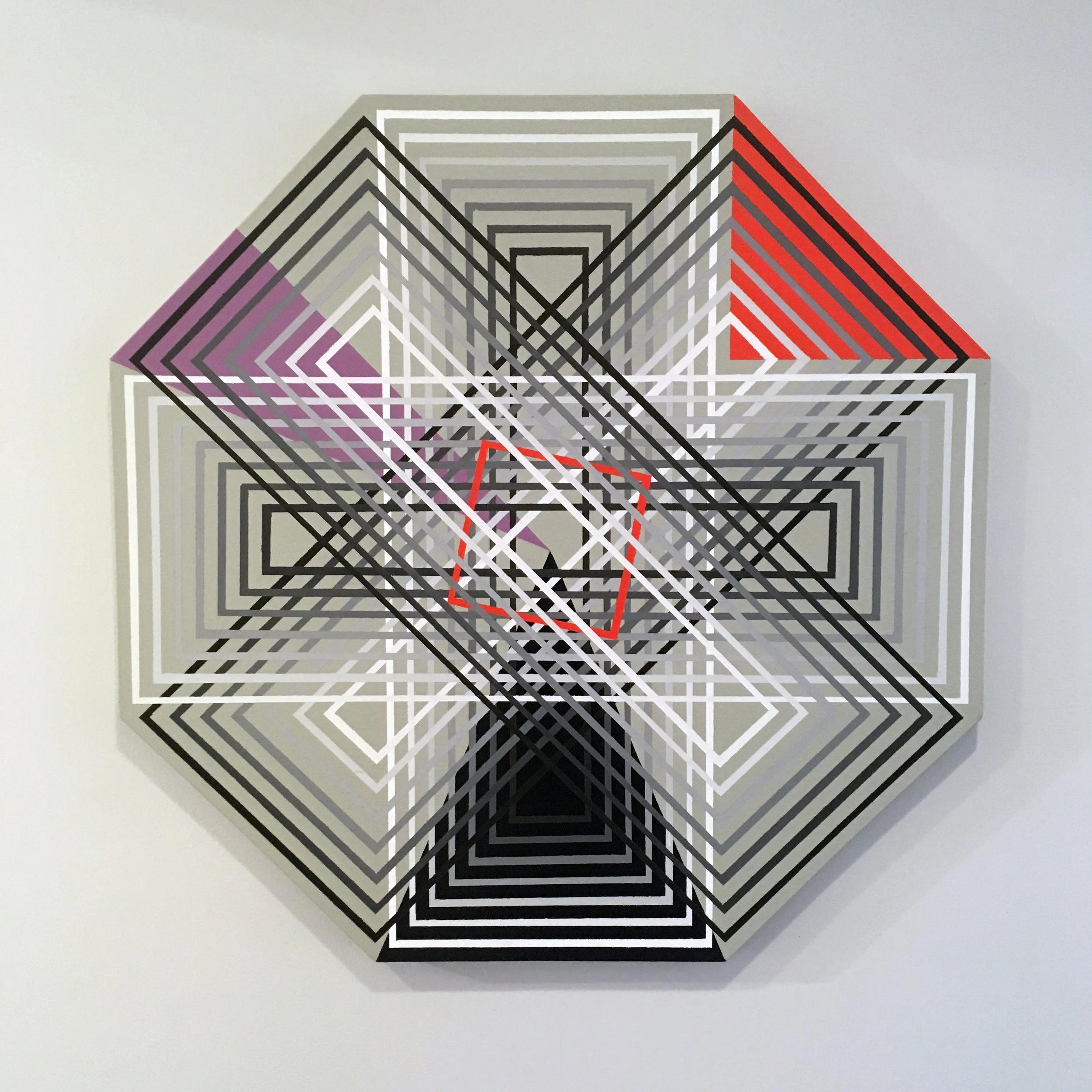
My geometric paintings are constructed through systems of angular division and chromatic structure. Beginning with shaped stretchers—triangles, hexagons, diamonds, and modular variations derived from the orthogonal grid—the format itself establishes the compositional framework.
Each painting develops through layered sequences of measured divisions. Working primarily within 30°, 60°, and 90° relationships, I construct interlocking planes that expand outward from a central geometric logic. The compositions are entirely hand-painted, yet they carry a digital sensibility generated through repetition, constraint, and algorithmic decision-making.
Color functions as a governing structure rather than decoration. Pairs of triads, calculated intervals, and controlled contrasts create differentiation without redundancy. Pinstriped edges and layered intersections heighten optical tension, producing subtle vibration between planes.
The work explores geometry as a generative system—where order produces movement, and precision coexists with the evidence of the hand. Structure becomes a field for experimentation, allowing variation, depth, and rhythm to emerge within constraint.saturated color. Rhythm, repetition, and the grid lay the foundation for the play of colors, and shapes.
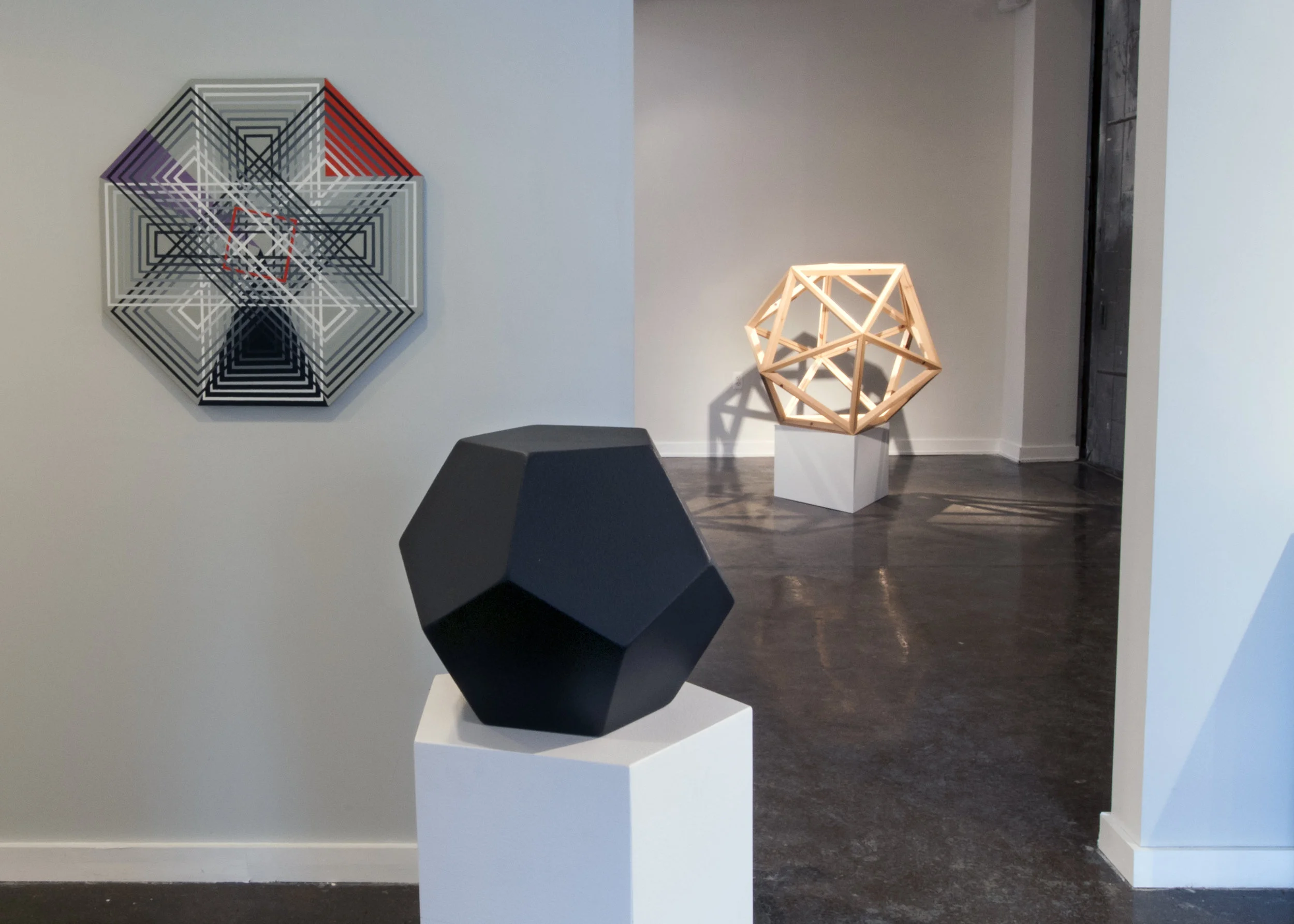
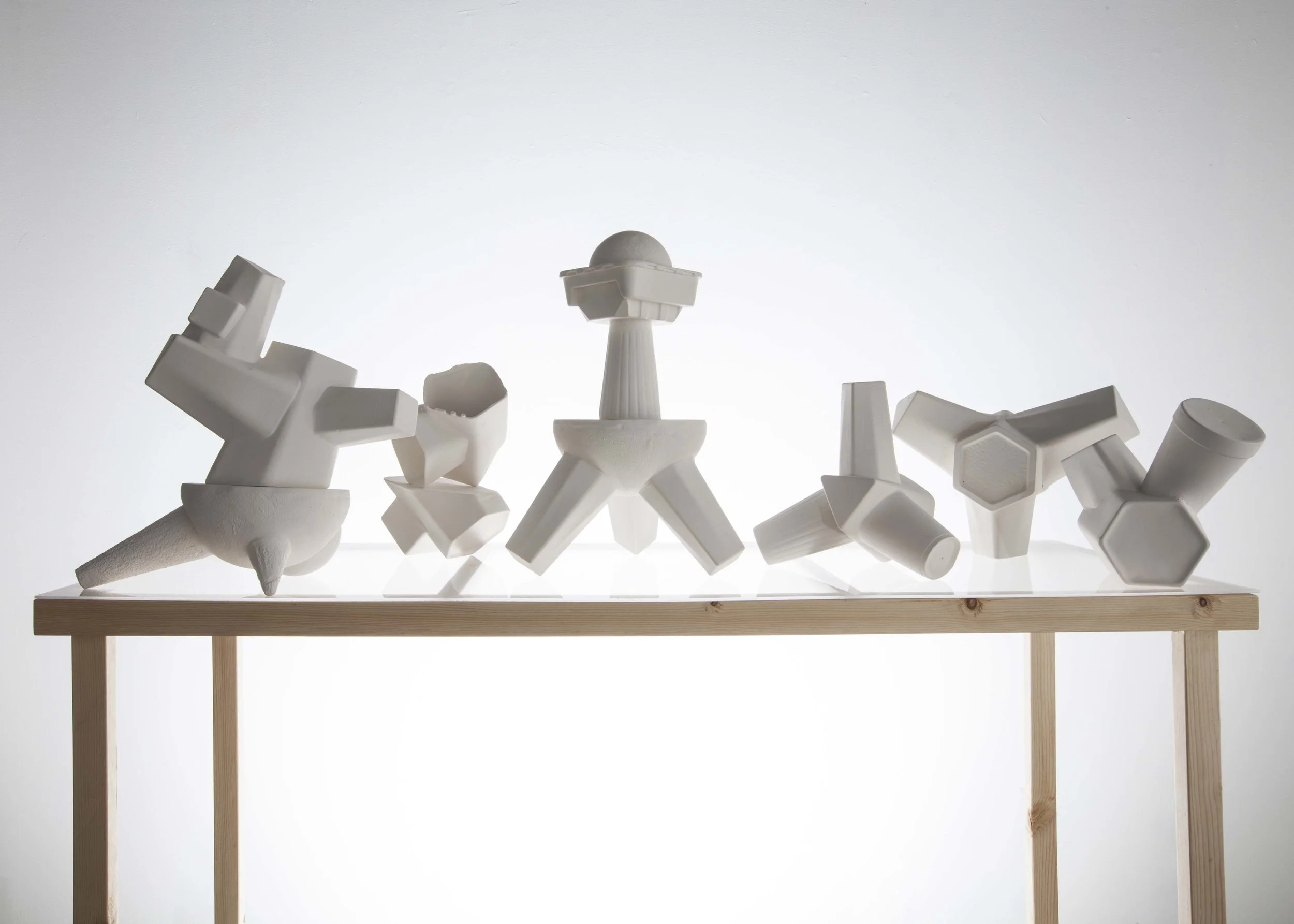
The works in Geometrix emerge from foundational geometric logic: predefined systems of angular division, modular relationships, and ordered shifts in scale and orientation. Each piece is rooted in structural constraint as a means of exploration.
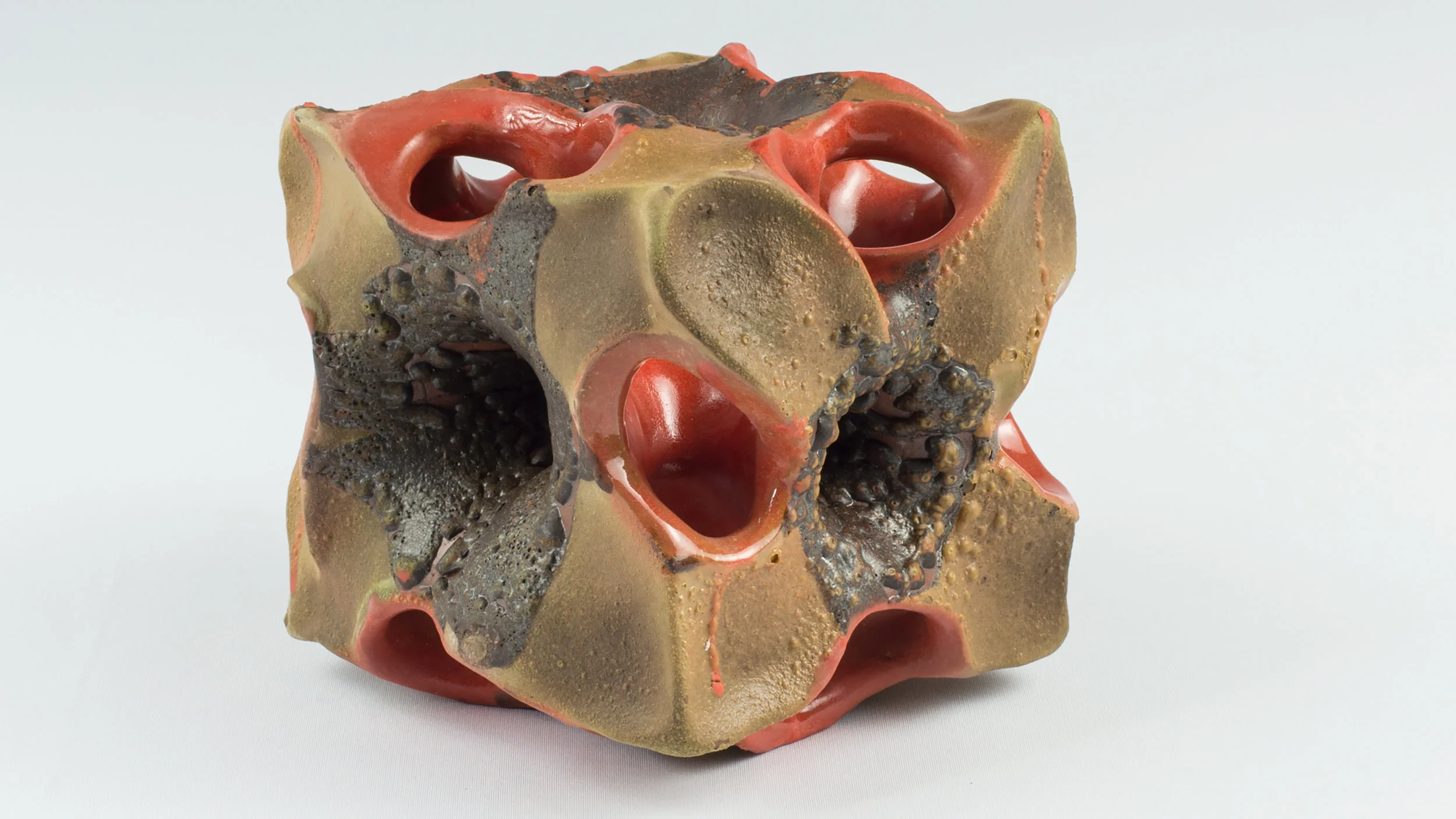
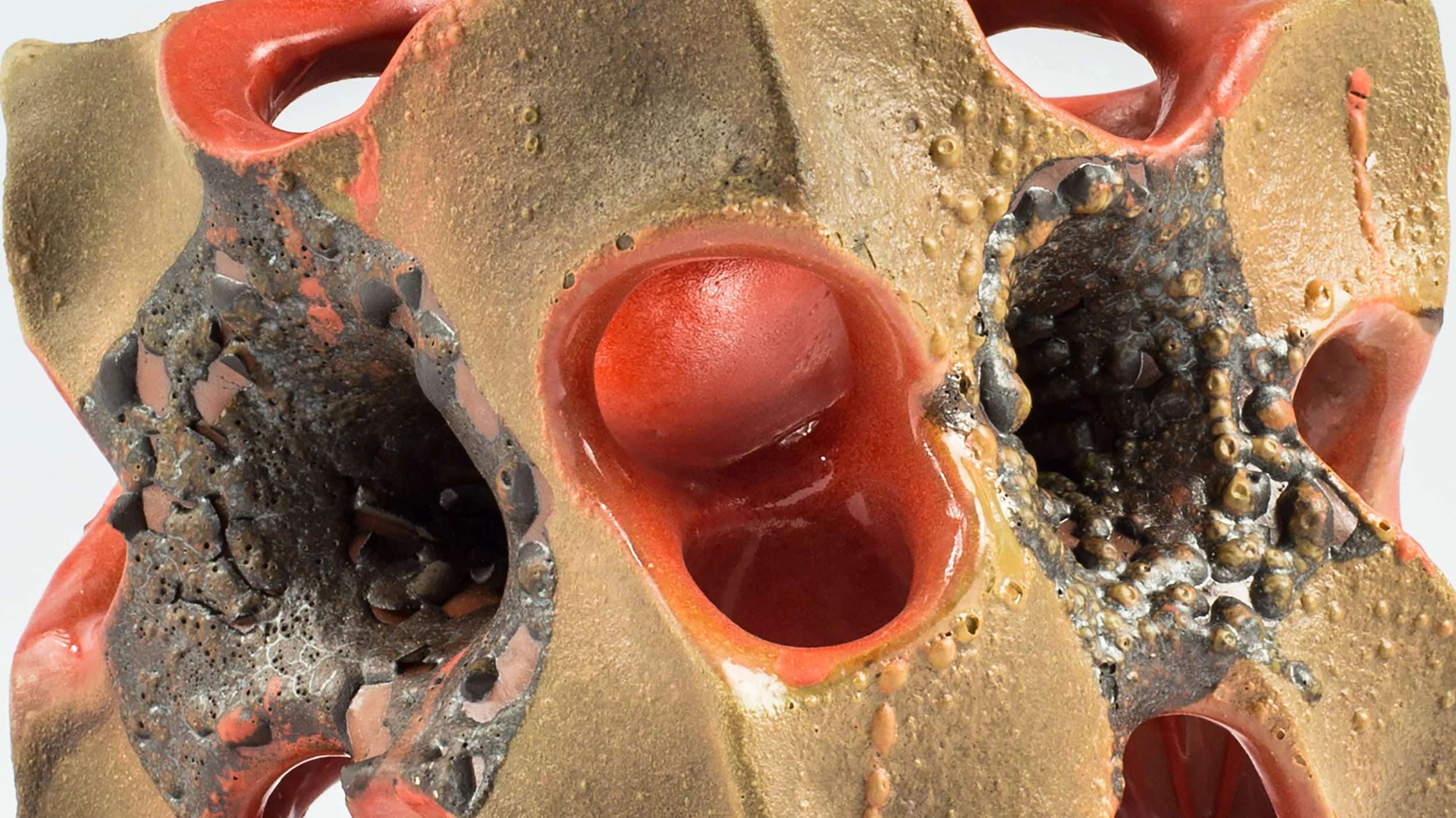
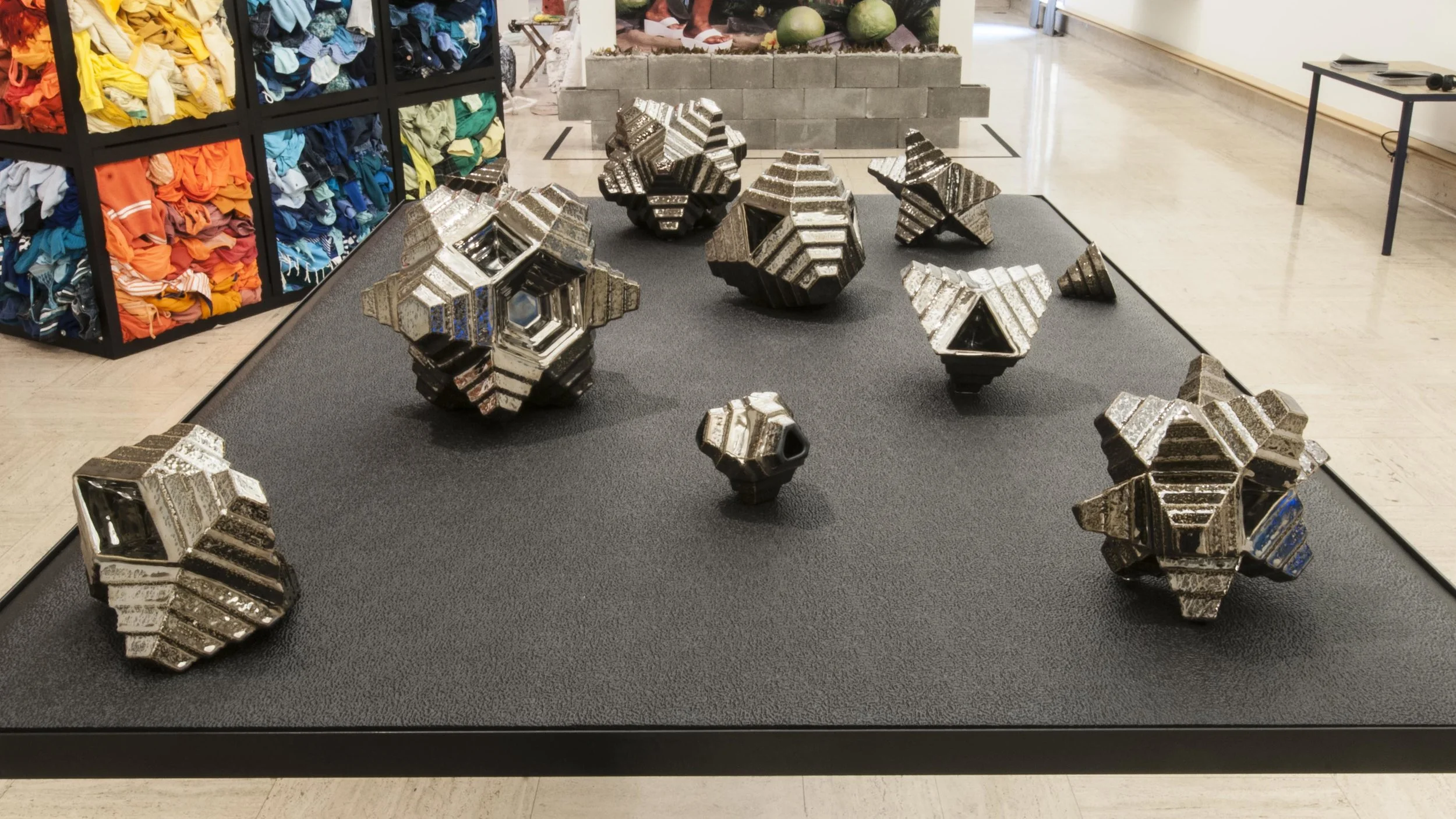
In sculpture, analog and digital fabrication coalesce. The logic of the Platonic solids animates these forms, positioning elemental structure as both idea and object. In painting, repetition and relational color govern the surface. Angular grids and layered geometry produce depth and optical rhythm, while chromatic systems function as determining logic rather than ornament.
Taken together, the works articulate a sustained investigation into how systems persist across media—how rules generate variation, how precision intersects with material contingency, and how structure becomes a site of discovery rather than constraint. Geometrix presents geometry not as static form, but as a dynamic field—a shared logic driving perceptual, material, and conceptual inquiry.
Gallerie Camille
January 12 - February 24, 2018
4130 Cass Ave
Detroit, MI
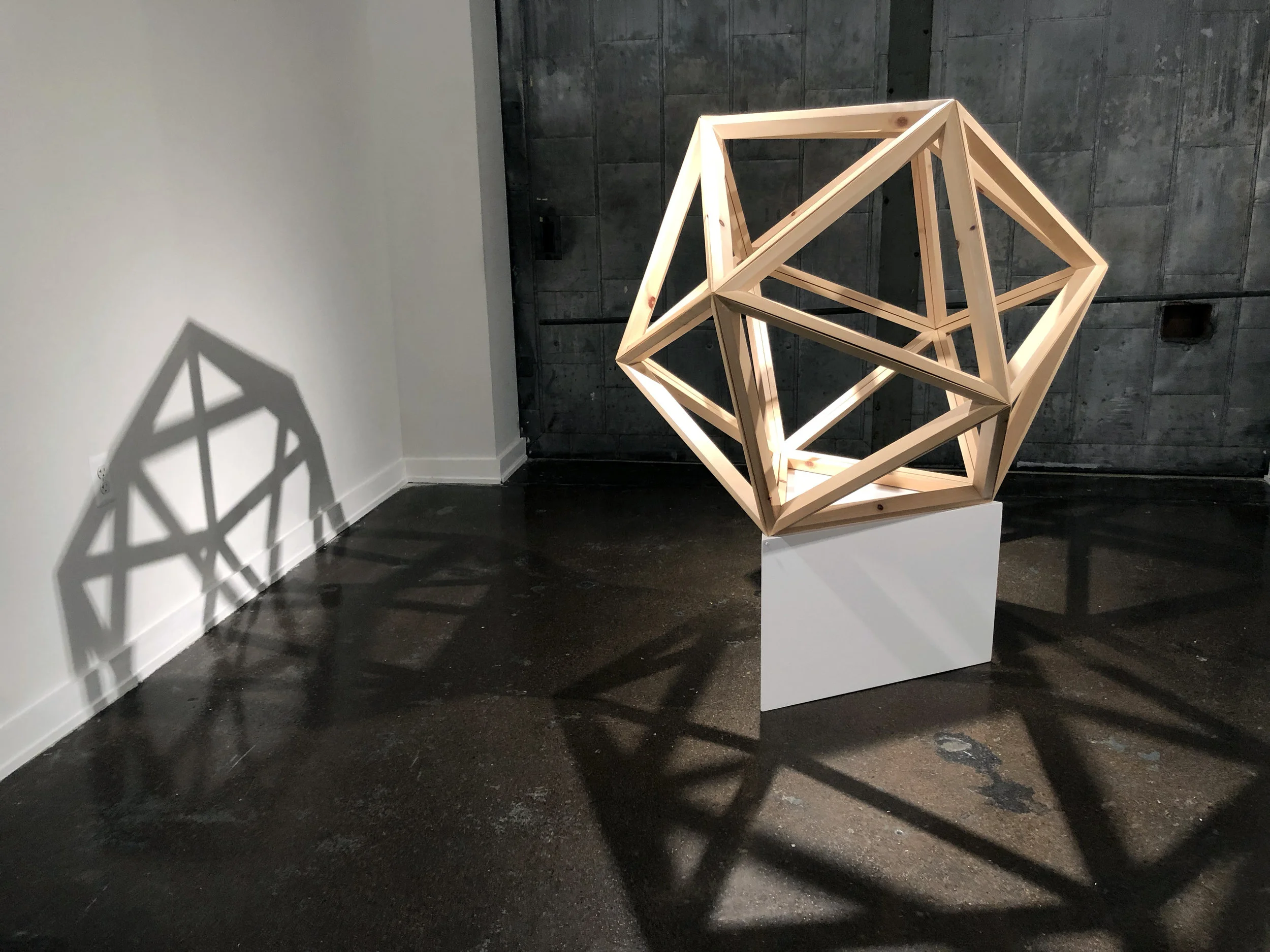
Shadows of Euclid was developed as my MFA thesis at Cranbrook Academy of Art, 2017. The work investigates geometry as both structural system and perceptual phenomenon, grounding itself in the foundational logic of Euclidean space.
Rather than presenting geometry as purely solid form, this body of work explores how planes, edges, and angular relationships are articulated through light and shadow. Form becomes legible through projection and absence as much as material presence. Cast shadows extend the work beyond its physical boundaries, activating the surrounding space and implicating the viewer in the construction of depth.
This series marked a shift in my practice from intuitive geometric construction toward a more deliberate investigation of system, perception, and spatial translation. Euclidean principles operate not as illustration, but as generative framework—establishing constraints through which variation and discovery emerge.
Shadows of Euclid laid the conceptual foundation for my continued exploration of geometry across sculpture and painting, positioning structure not as static order, but as a dynamic field shaped by light, material, and observation.
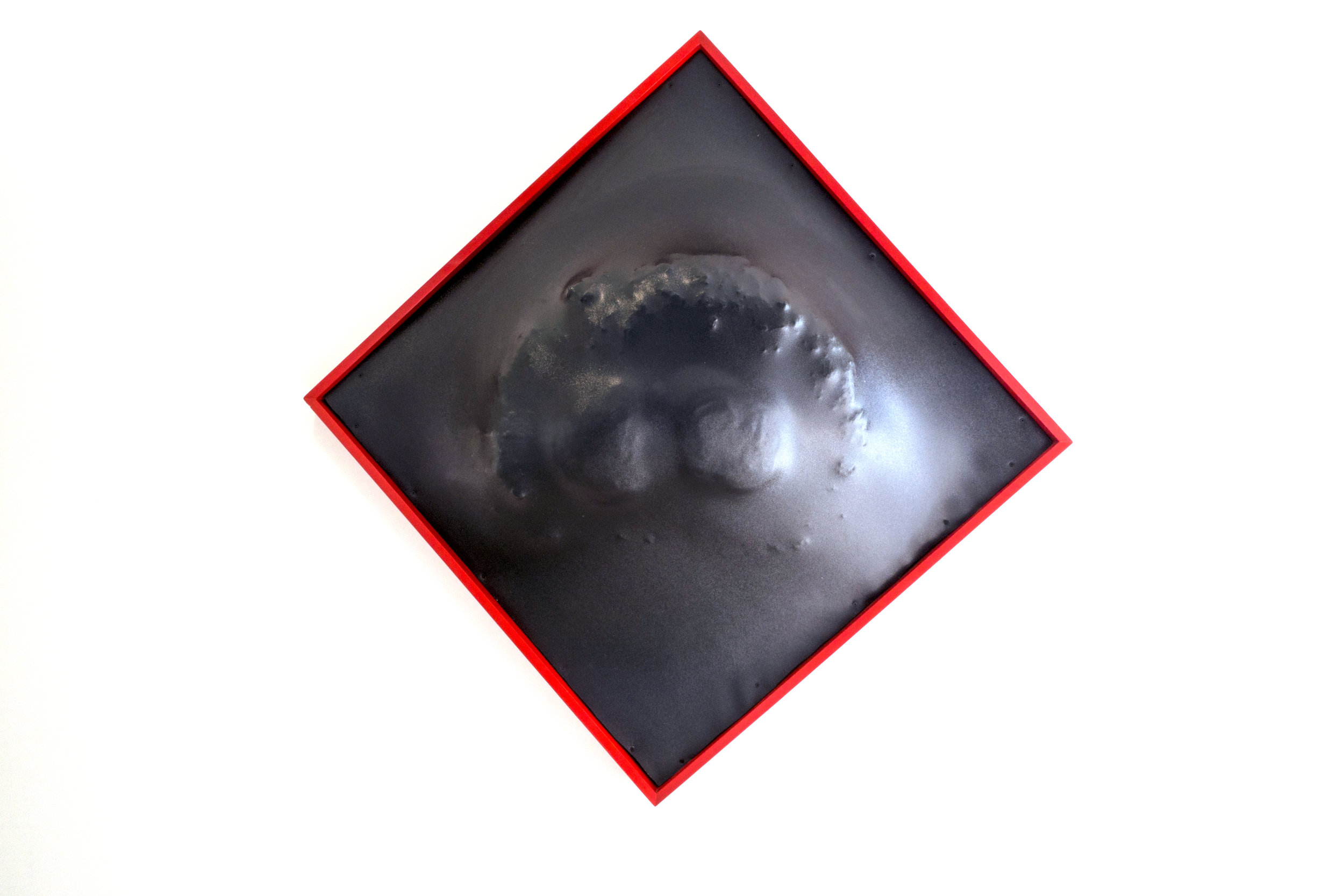
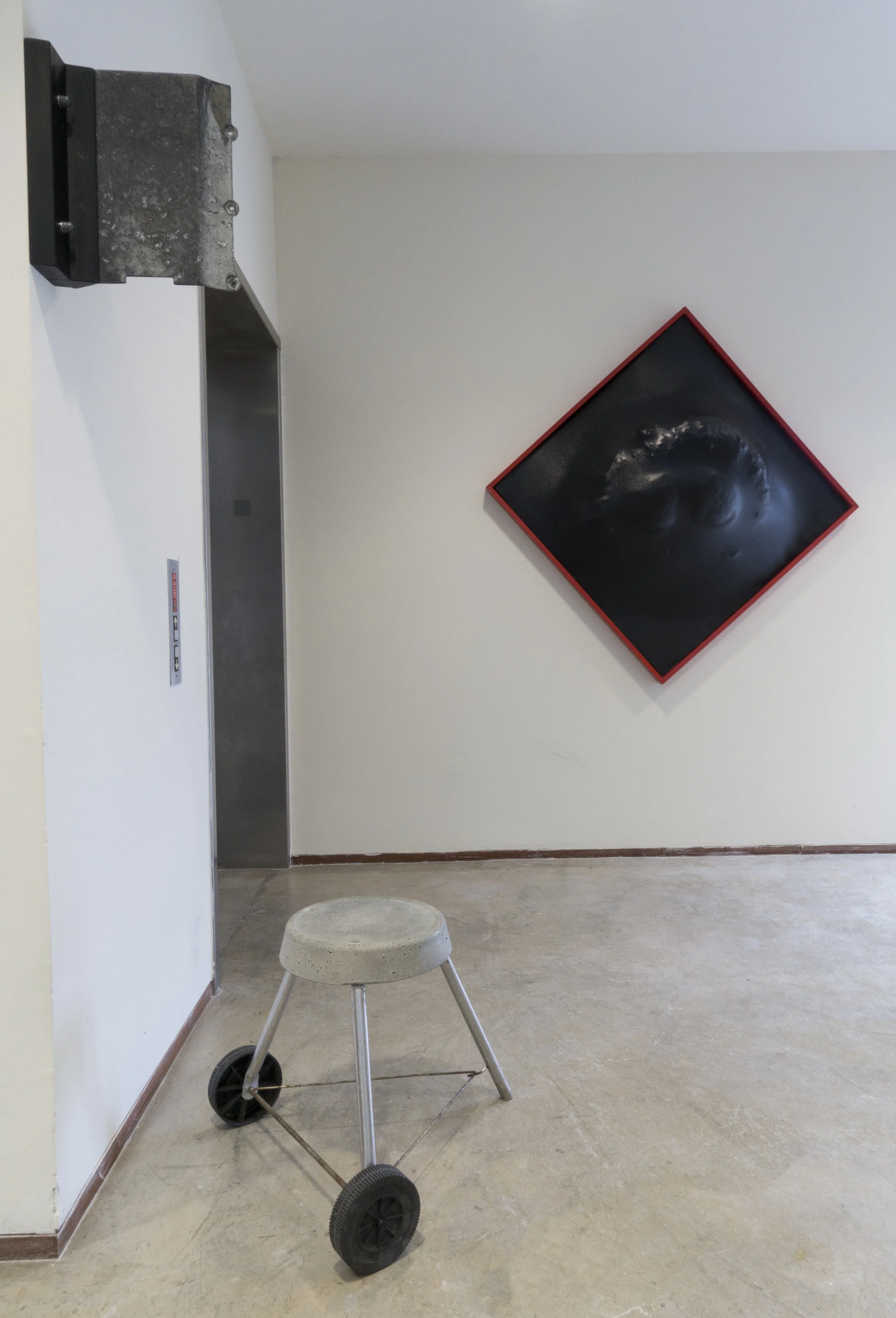
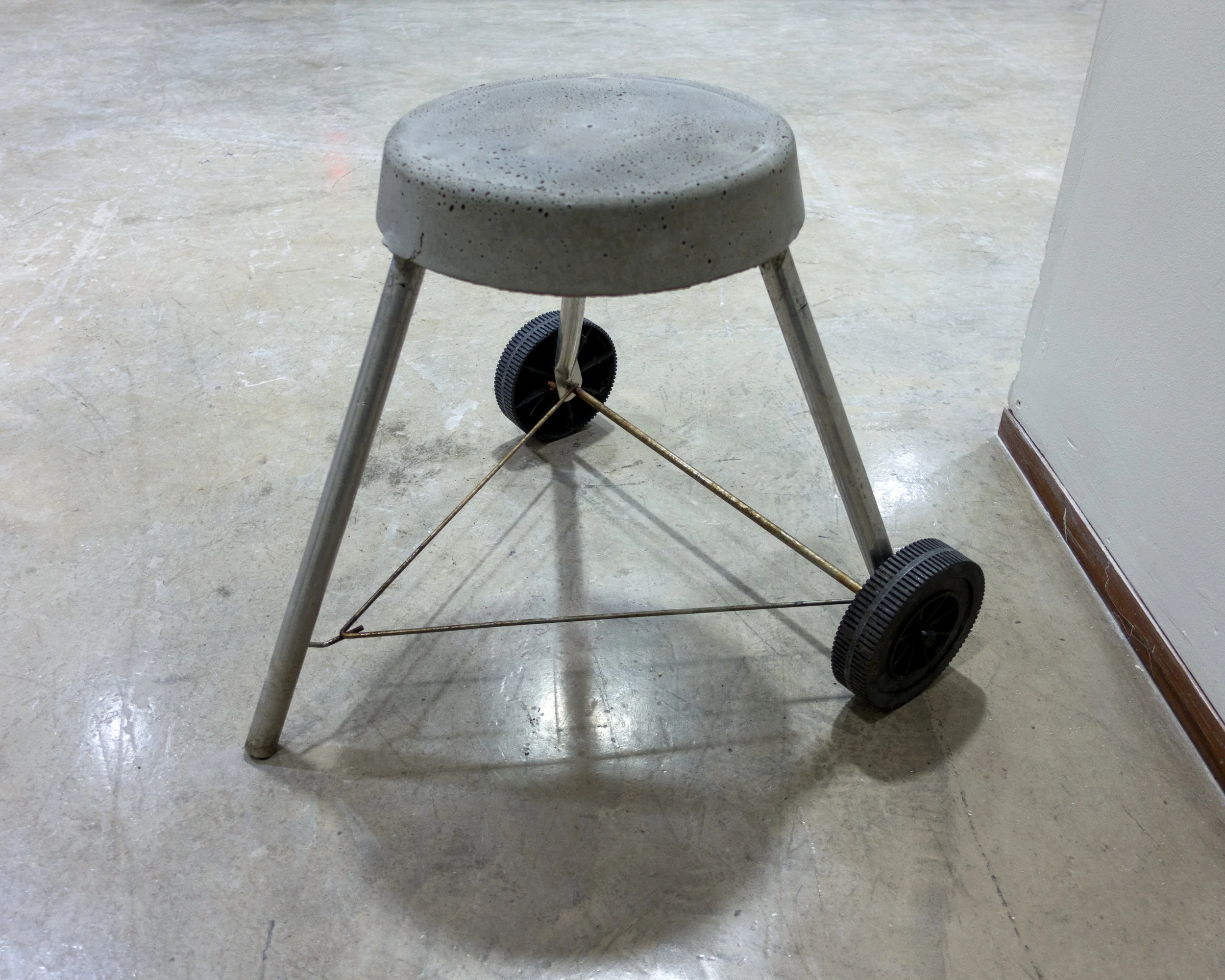
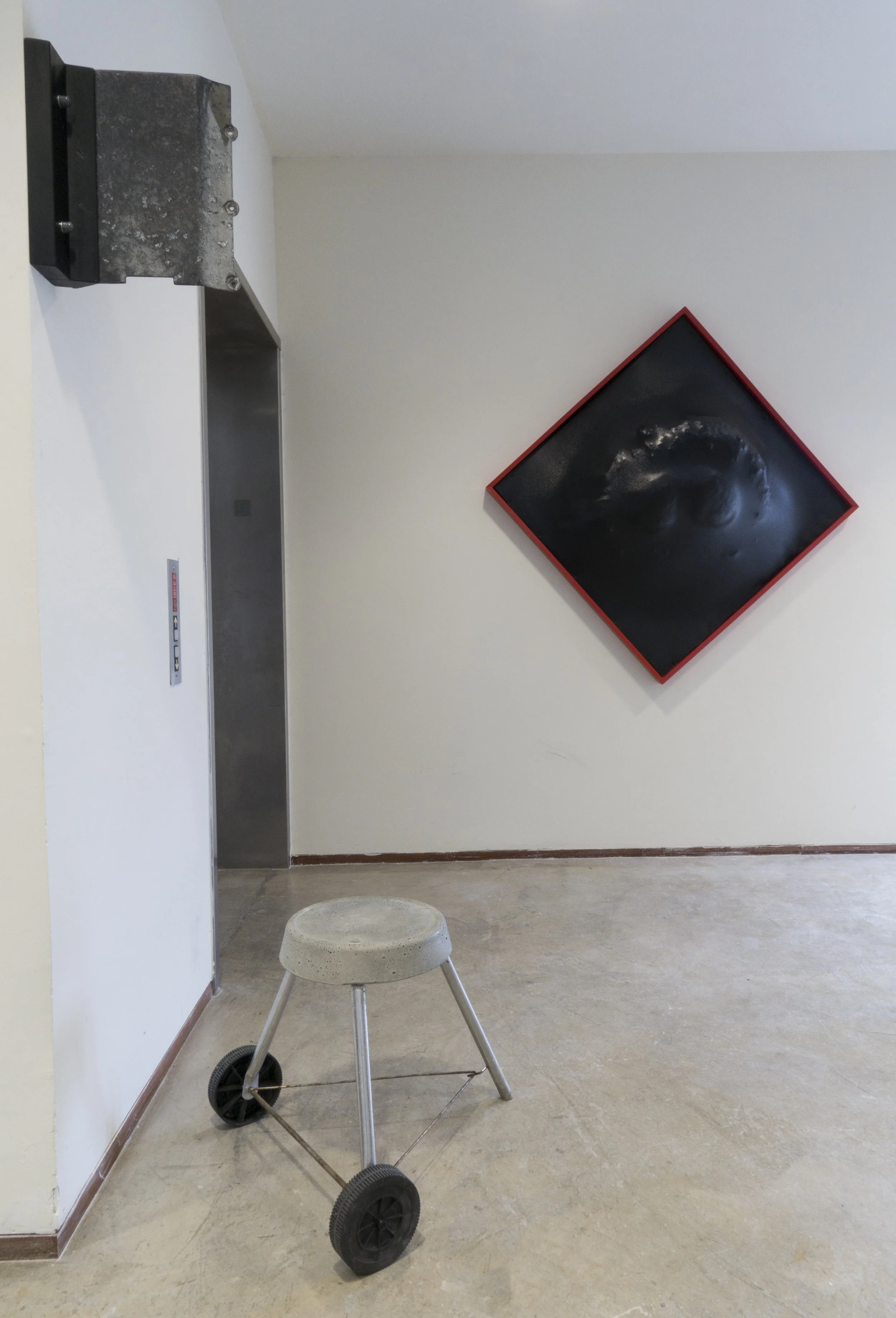
Taking molds from both found objects and 3D printed forms I created a series of composite pieces that test different geometries, seeking both symmetrical, and asymmetrical balance dealing with irregularity.
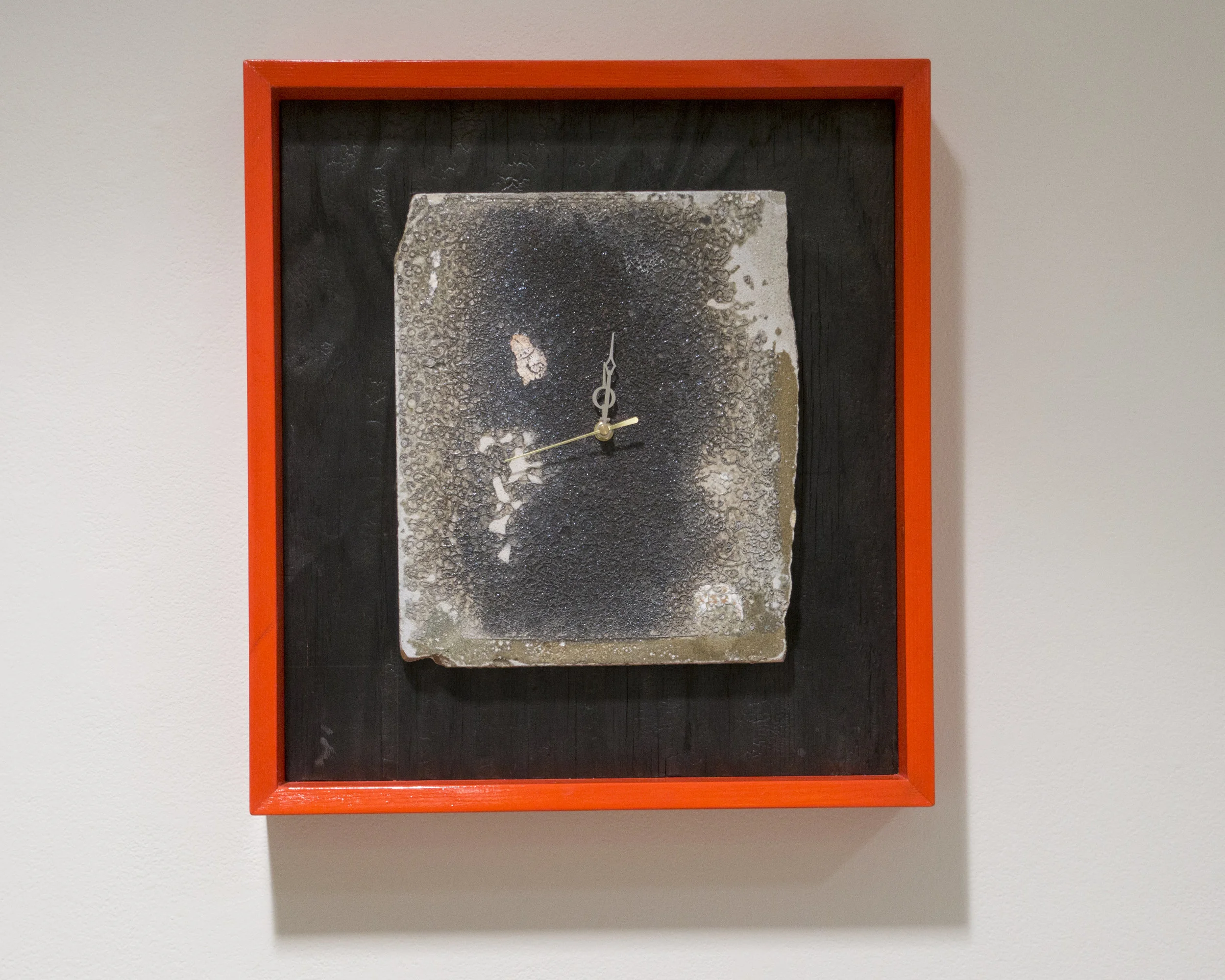
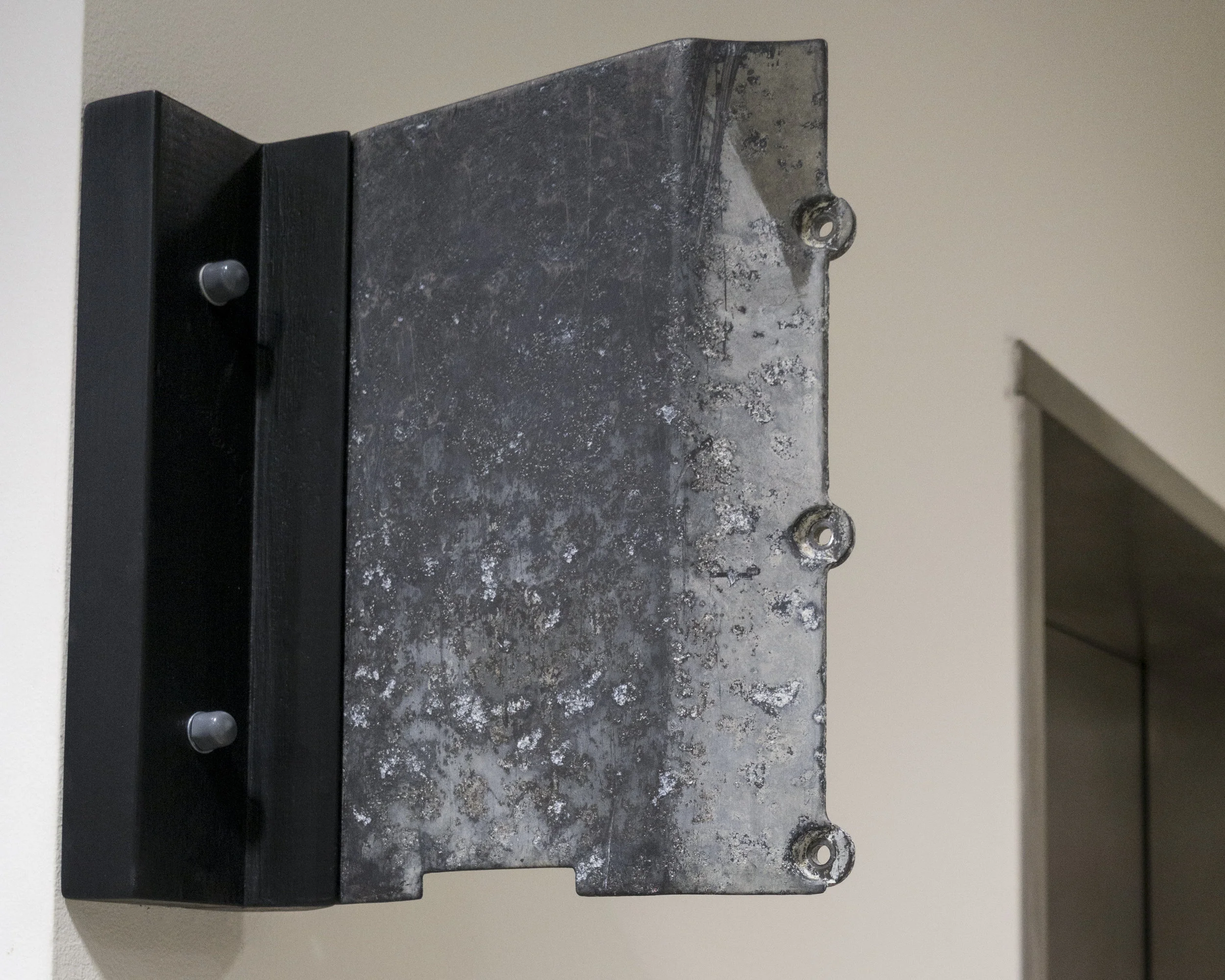
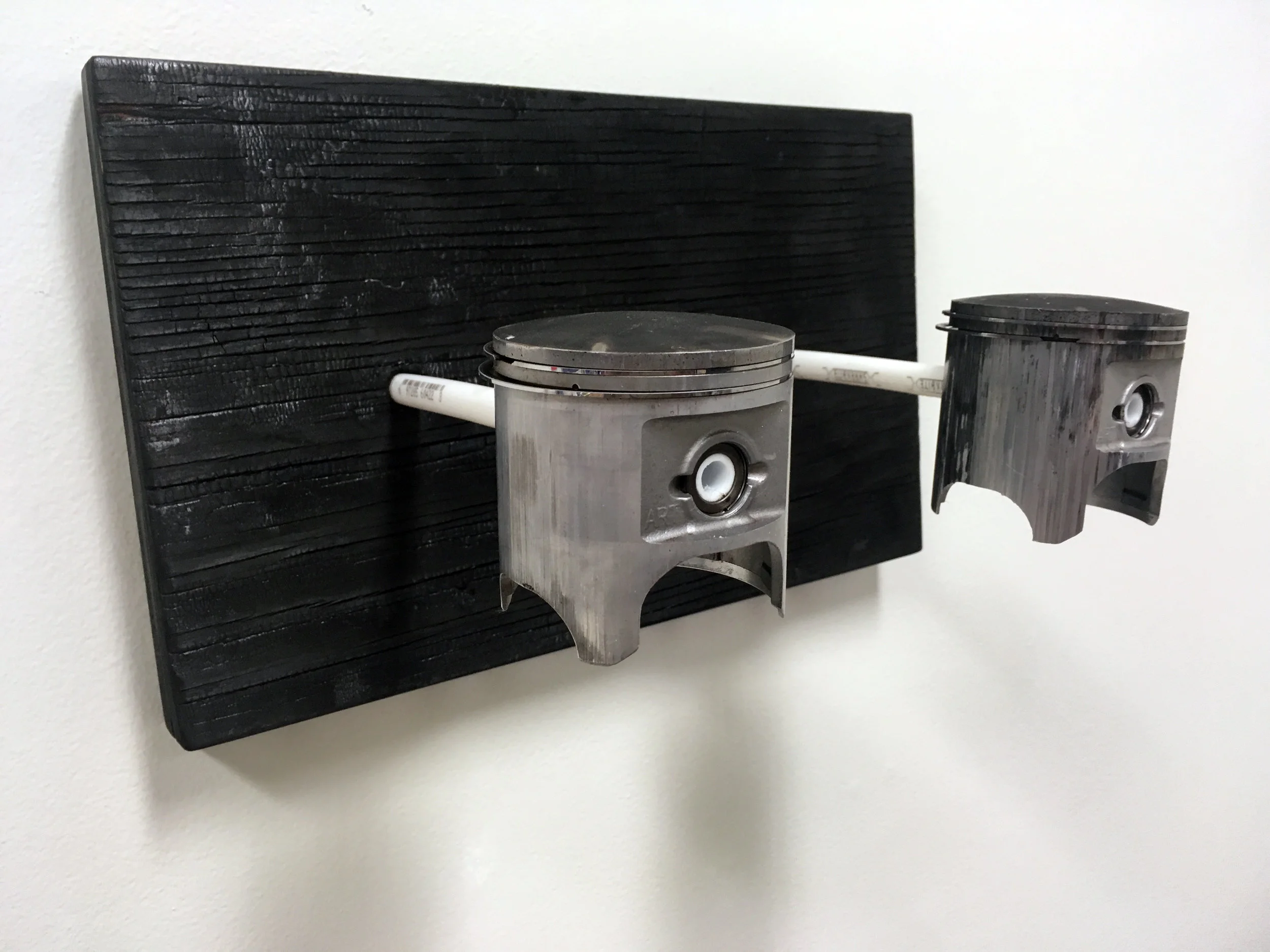
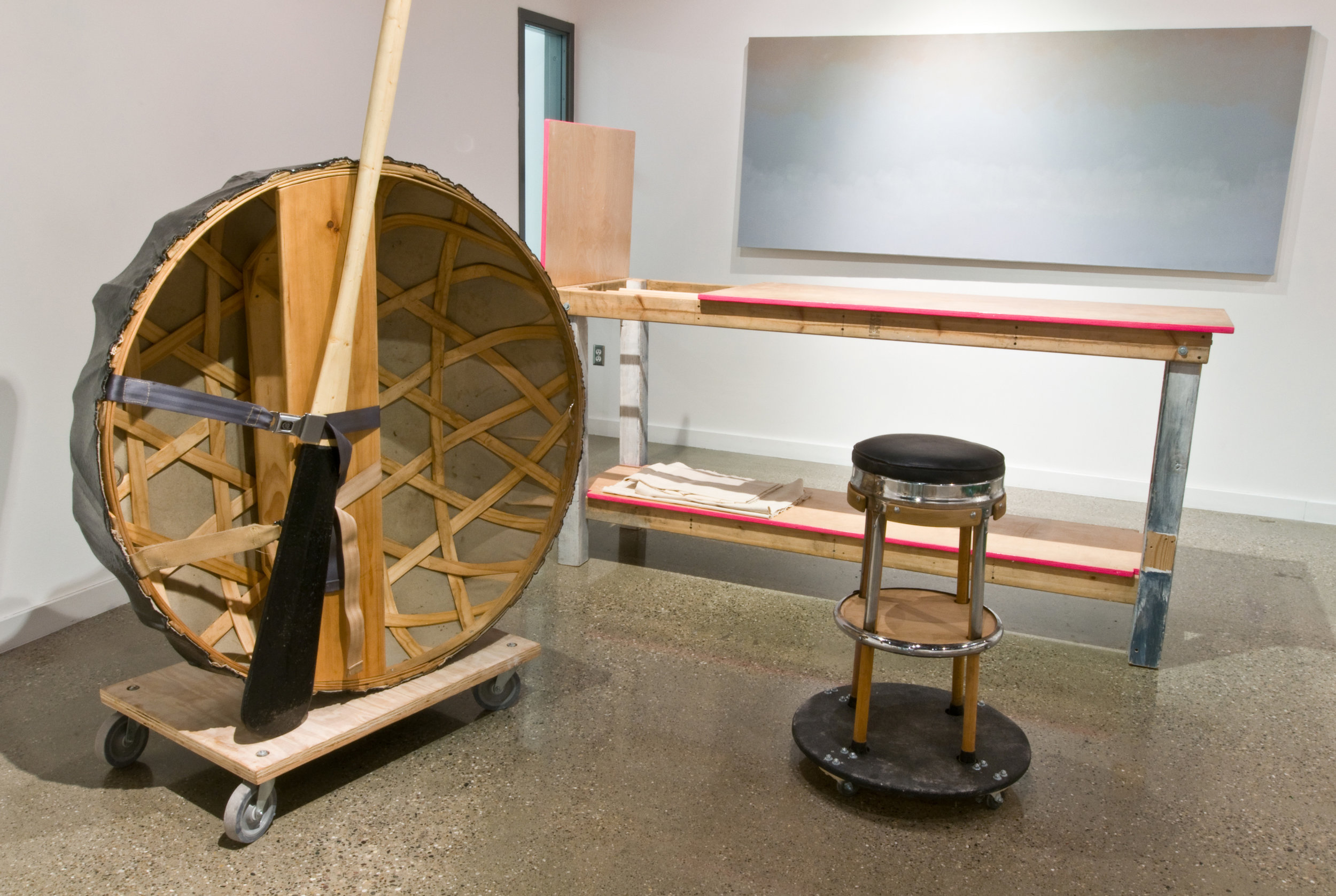
Working with found objects and new materials creates different ways for me to consider form. Assemblage allows me to juxtapose a thing or an idea. In many of these works framing is being used to present a three-dimensional object as two-dimensional image. These objects are meant to question their status as an artwork.
“Origins of Life” is the body of ceramic work that seduced me into my ongoing love affair with clay. The tactile nature of the pinch process transforms sensual touch into visual language. The viewer can read the movement of my caress through the form, and empathize with the spatial curiosity of the hand. Entirely transformative, the process is about realizing, and expanding upon connections that already existed within the primal solid.
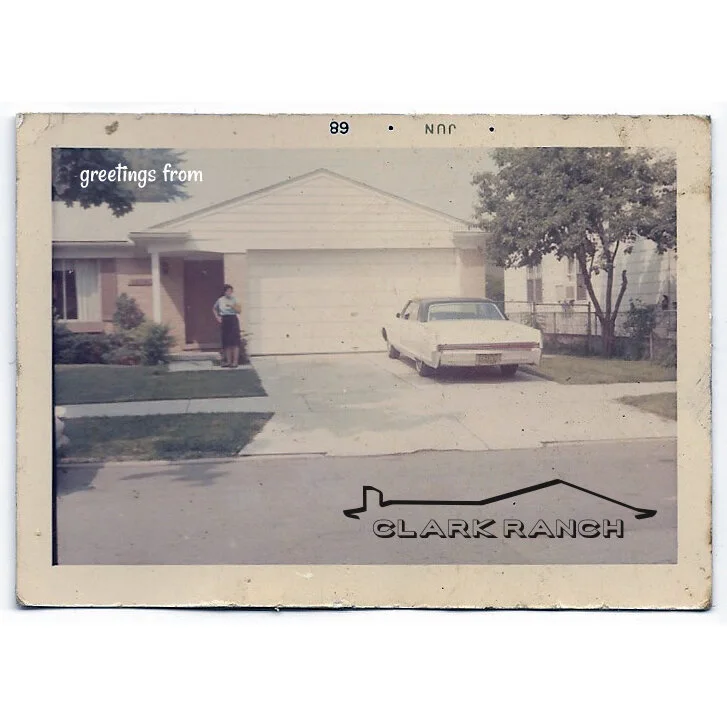
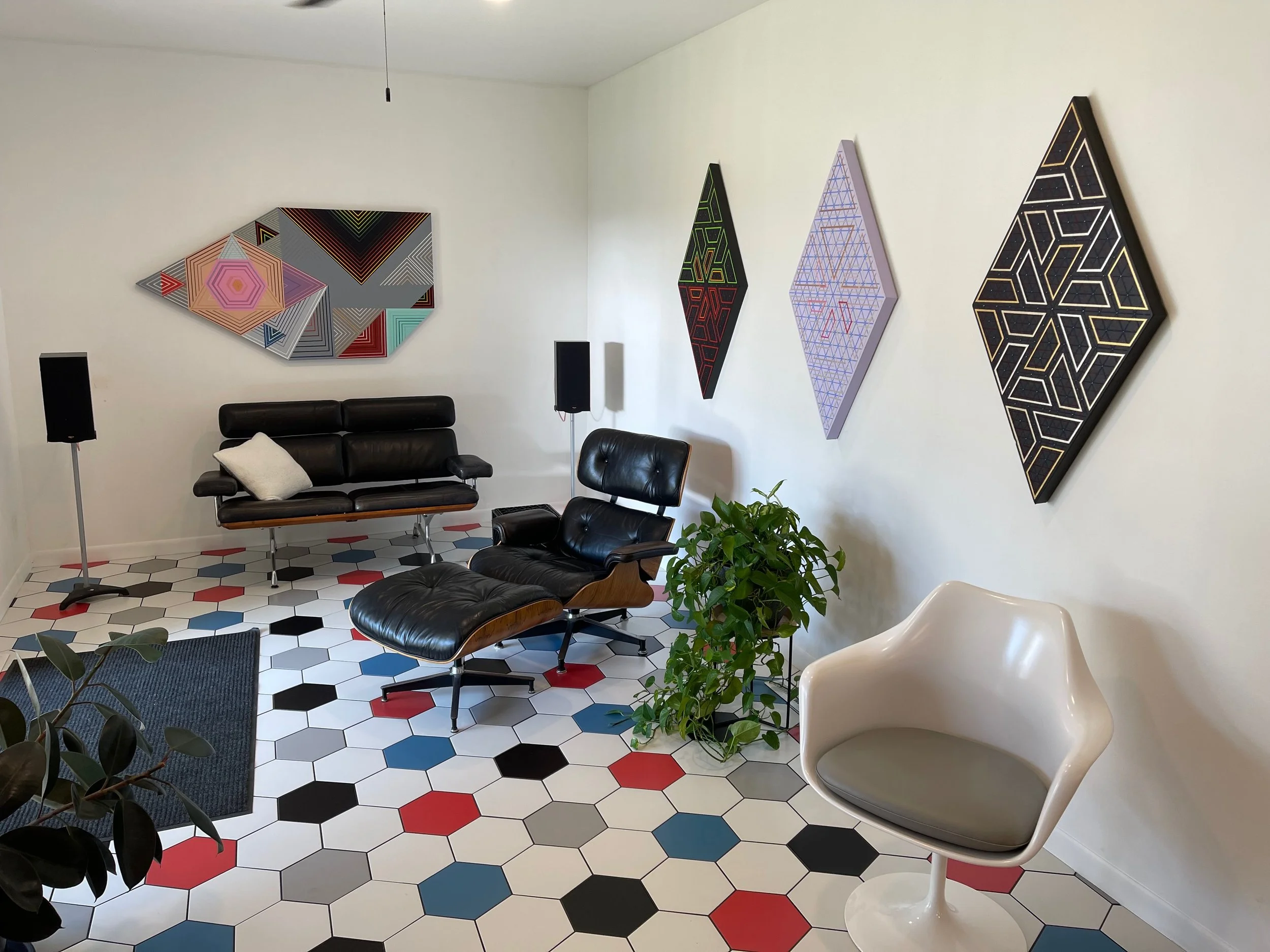
In 2018, I purchased a 1964 ranch home in Hamtramck, built during the construction of I-75. Its mid-century footprint stands in contrast to the early 1900s homes that surround it, a quiet anomaly within the neighborhood’s architectural fabric.
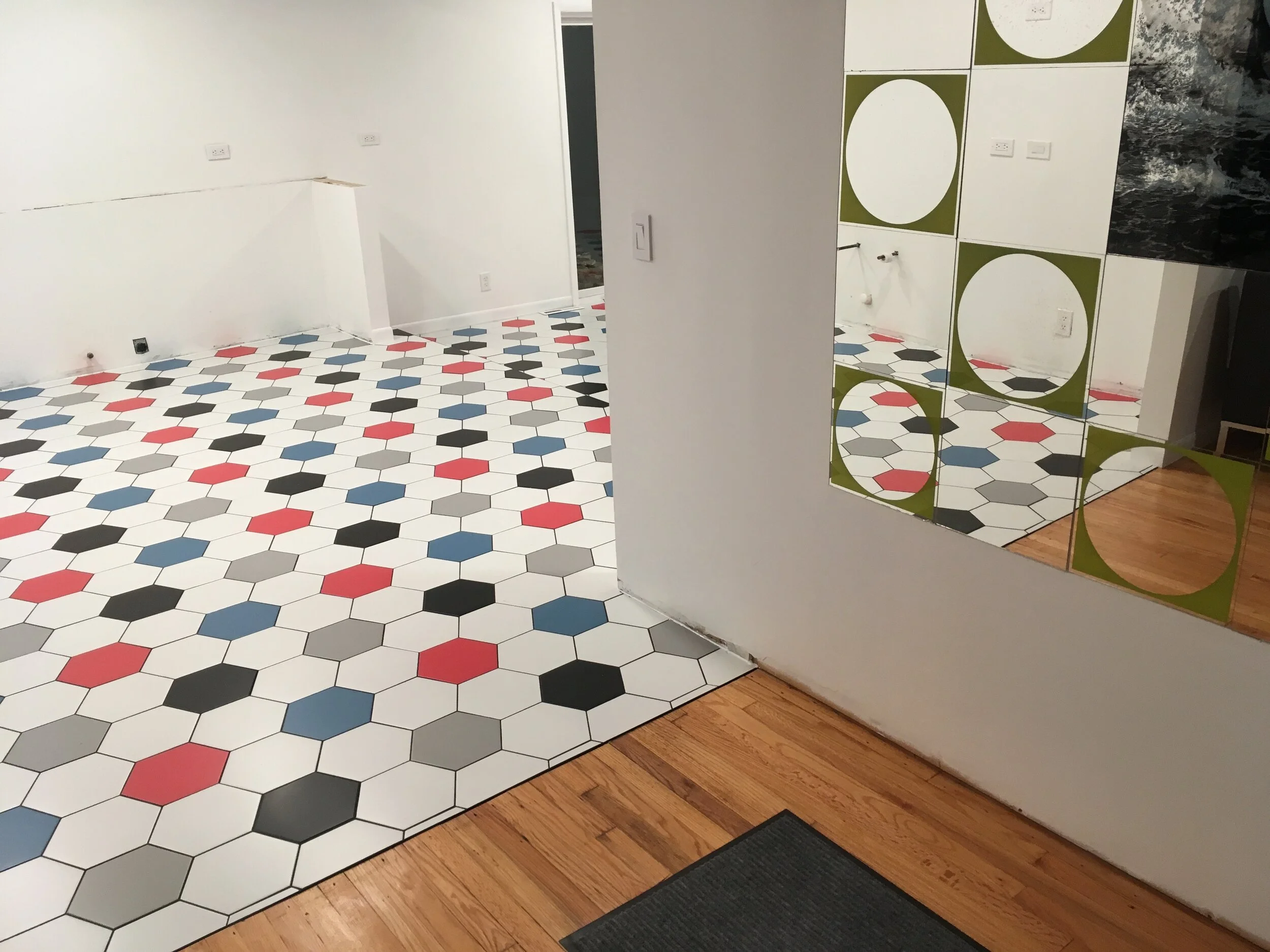
Over time, I reconfigured the interior to create an open plan, removing a centrally located half bath to increase light, circulation, and spatial continuity. The renovation became an education in electrical, plumbing, and construction systems—an extension of my interest in structure beyond the studio.
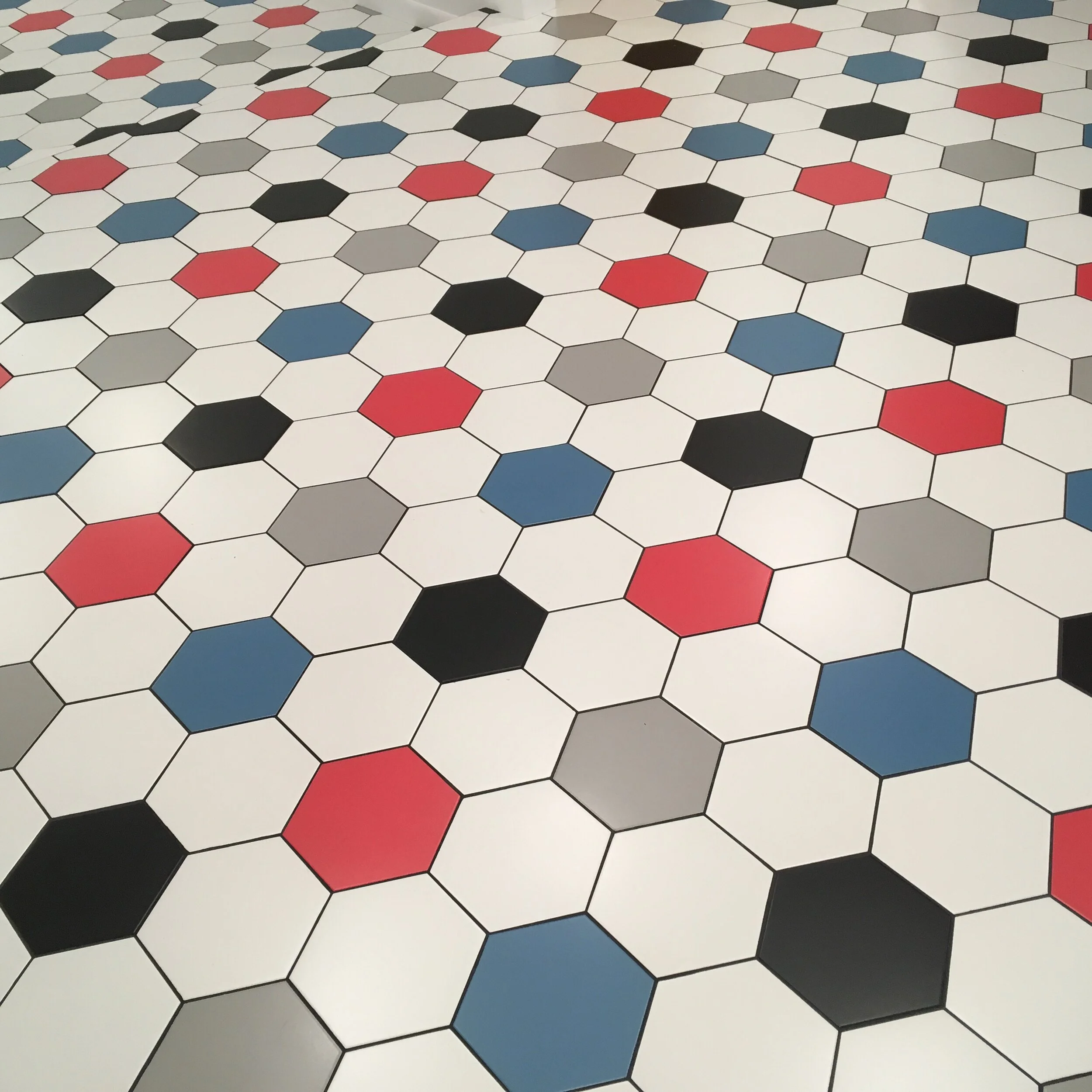
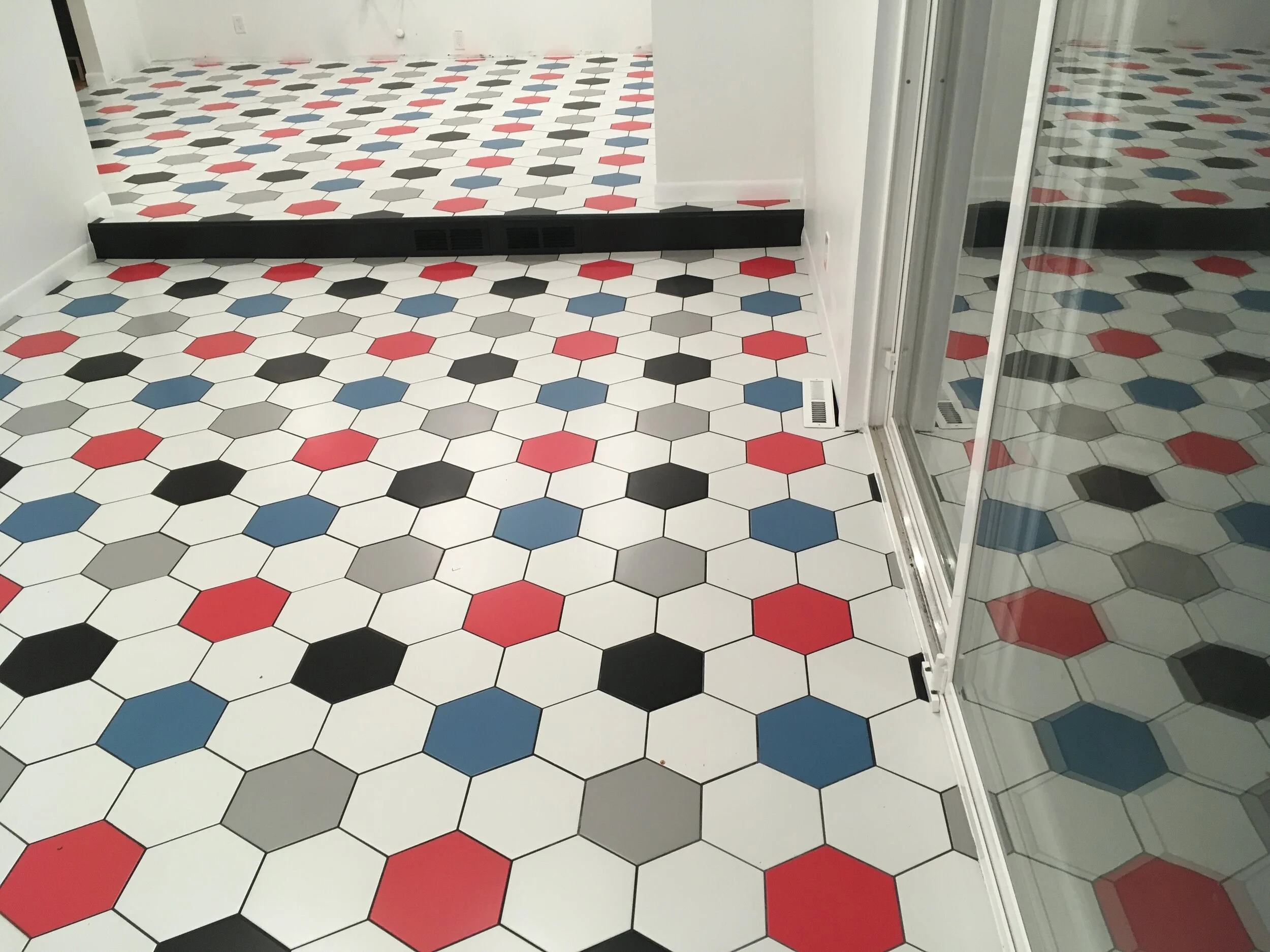
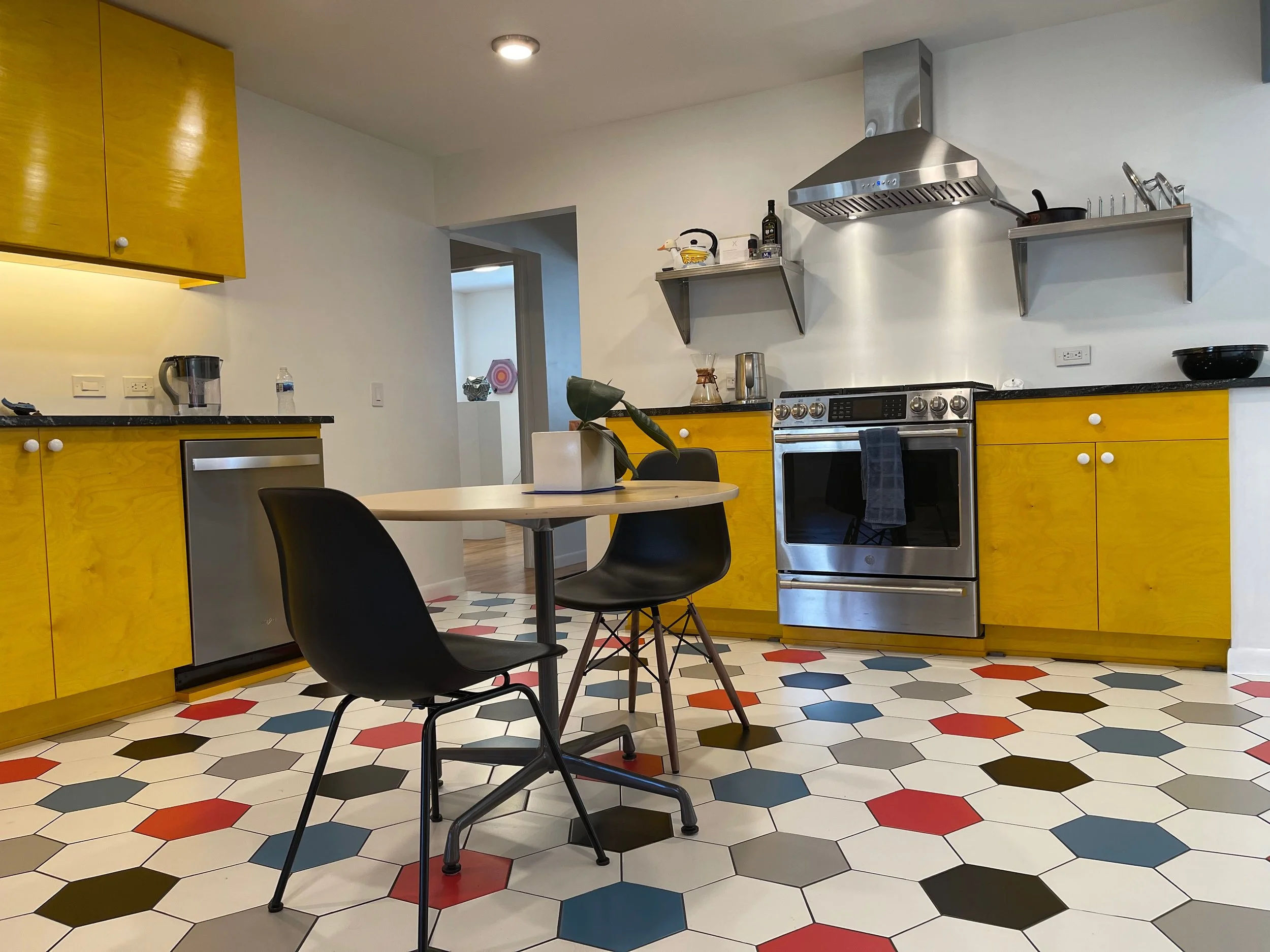
The kitchen was redesigned as both a functional workspace and a formal composition. A five-color tile floor, custom yellow cabinetry, and black granite countertops reference De Stijl aesthetics—a subtle nod to Dutch heritage—while maintaining practical clarity and flow.
The basement now serves as a studio for painting and ceramics, with the kiln and woodworking tools housed in the garage. In warmer months, the workspace expands outward, allowing for the fabrication of stretchers, furniture, and custom-built structures.
The ranch operates as a live/work framework—an evolving system where architecture, design, and daily life intersect. It is both home and laboratory, a space shaped by the same principles of structure, adaptation, and translation that guide my studio practice. that landed me a job selling tile until I broke my ankle.
Clark Ranch began as a personal branding project for my home, envisioned as a combined residence, studio, and gallery space for my creative work. I photographed the house and created a vector tracing of its distinctive mid-century roofline, gradually refining and reducing the form until it captured the architectural essence without becoming overly literal. The resulting mark balances abstraction and recognition, reflecting both the structure itself and the creative practice housed within it. The identity was designed for use across flyers, invitations, and exhibition materials, establishing a cohesive and enduring presence for the space.
Designed a comprehensive corporate identity system for Done & Done, a fictional independent hardware retailer. The brand centers around a bold, simplified tool-inspired mark paired with strong typographic treatment to convey reliability, craftsmanship, and efficiency. The identity system was extended across stationery, storefront signage, and vehicle graphics to ensure cohesive brand visibility across customer touchpoints.